


True-False Healthy eating
We say a lot of things about food! Either by attributing sometimes magical virtues to some, or by demonizing others. What if we took stock of some preconceived ideas by sorting out the true from the false for these 21 questions that are bothering you regarding ahealthy diet .
Starchy foods: they make you fat, so should we stop? FALSE.
As with all foods, variety is what counts. Starchy foods are essential, so it all depends on how you serve them! Steamed potatoes with fresh herbs and a knob of butter are lighter and easier to digest than greasy fries . Always remember to accompany starchy foods with raw vegetables or a small green salad to provide the alkalizing touch that will rebalance the plate. Starchy foods provide carbohydrates, a real fuel for the body, necessary for the muscles but also for the brain and the heart. In a day, your food bowl can consist of around 50% starchy foods. Be careful when cooking pasta, prefer it al dente because if it is overcooked, its carbohydrates are less well metabolized.

Olive oil: and nothing else? FALSE.
Although it is excellent for its omega 9 and 6 content, it is recommended to vary the oils: walnut, flax, rapeseed, camelina, grape seeds. Avoid coconut oil , which is too rich in saturated fatty acids.
Oil: lighter than butter? FALSE.
No, no, oil is 100% lipid while butter is only 80%. On the other hand, we need good oils (olive, walnut, hazelnut, rapeseed, camelina) because omega 3 is essential for the proper functioning of the brain and all organs. A real energy store, fat makes up the cell membrane, so it is essential.
Egg: too high in cholesterol, should I stop? FALSE.
Dietary cholesterol is almost not affected by blood cholesterol, which is generated by the liver. Because they are rich in vitamin B, eating eggs regularly reduces the risk of cardiovascular disease by about 25% because the cholesterol in eggs prevents the body from producing it itself. In addition, eggs are an interesting source of protein.
Lactose: Doesn’t sheep’s milk contain any? FALSE.
It contains about 50 grams per liter compared to 47 for cow's milk. Its fat content is also twice as high. Avoid if you are lactose intolerant.
Honey: should you consume it without moderation? FALSE.
It's still sugar. About 80% of honey is sugar, although it does contain some minerals and vitamins.
Protein: at every meal? FALSE.

There is no need to eat meat or fish every day, and even less so at lunch and dinner. Swap them for plant-based proteins on a regular basis. Put pulses, legumes, and whole grains on the menu, alternating with fish and meat. But, unless you are vegetarian or vegan, do not eliminate meat and fish, which all contain essential amino acids, unlike legumes. Muscles and the immune system need them. By alternating animal and plant-based proteins, you help reduce pollution. Go see the film, Animal, by Cyril Dion to convince yourself! #animal.thefilm
Sugar : Does it make you fat? TRUE.
Yes, we (almost) all like sugar, associated in our subconscious with sweetness and reward. So yes to sugar in homemade recipes (pastries, pancakes, etc.) but no to added sugars in drinks, alcohol, confectionery and industrial pastries. This glucose intake provides energy to the organs and the brain but it must be consumed in small quantities (those found naturally in fruits and homemade preparations are sufficient). Prefer brown sugar, which is richer in magnesium, potassium, phosphorus, but there is no point in consuming more just because it is more interesting.
Calcium: Does skim milk contain less than whole milk? FALSE.
While fat is eliminated in skimmed milk, this is not the case for the other nutrients in milk. On the other hand, calcium is also found in many waters, sardines, fresh parsley, cheeses, watercress, and seaweed. Beware of "plant milks" (almond, oat, soy rice, coconut, etc.) which do not have the same nutritional value as cow's milk, far from it! They are naturally low in protein (with the exception of soy beverages), generally enriched with simple sugars or even oil, do not contain calcium and very few vitamins.

Vegetables: frozen, are they less rich than fresh? FALSE
Far from it, they are often even more vitamin-rich than some poorly preserved fresh vegetables, whether during the distribution circuit or at home. Fragile, vitamins are easily destroyed by light, heat, air. Vegetables oxidize and nutrients degrade. Washed and then frozen very quickly after harvest, vegetables retain all their nutritional qualities.
Fruits: whole or juiced, is it the same? FALSE
There is one small thing that separates them: fiber, which makes all the difference. The fiber contained in whole fruits allows the proper assimilation of carbohydrates. Juices, on the other hand, deliver their dose of sugar, which immediately goes into the blood and increases blood sugar. As for vitamins, fresh juices contain as many as whole fruits, but they must be drunk quickly. To be more digestible, fruits and fruit juices are consumed at the beginning of a meal rather than at the end. Placed above the food bowl, they tend to ferment and slow down digestion.
Orange: the champion of vitamin C? FALSE


Kiwi contains twice as much, yellow pepper surpasses them both with almost twice as much as kiwi and therefore four times as much as orange.
Vitamin C: Does it prevent you from sleeping? FALSE
If vitamin C acts on dopamine, which itself acts on wakefulness, conversely, it does not intervene on the sleep cycle, which can naturally take place in parallel and independently. Therefore, taken outside of or at the end of a meal, a fruit juice swallowed in the evening can be indigestible and therefore prevent sleep, but this will be independent of vitamin C.
Spinach: the champions of iron? FALSE
If Popeye claimed the superpowers of spinach, it is about ten times less rich in iron than what has long been imagined. Lentils, parsley, certain waters, offal, black pudding, dandelion, purslane, white and red beans contain more . Women need about 24 mg/day, men half as much. Spinach benefits from other qualities. Rich in vitamins A, B9, C and K, in antioxidants , it is also very low in calories. It is one of the most interesting detox vegetables to eat raw, in salad, cooked or in juice.
Meals: Do we skip them to lose weight ? FALSE
Skipping meals is not interesting, unless, when sick, you cannot swallow anything. And, there again, it is more necessary than ever to hydrate or rehydrate in the event of gastroenteritis for example. Digestive herbal teas combined with a real vegetable and poultry broth, provide everything the body needs in the event of digestive disorders. Skipping meals regularly encourages the body to restore the balance between energy intake and expenditure, and to do this, it will draw on its reserves. But, as the body is intelligent and has a memory, alerted by repeated deprivation, it will store more and more in order to build up reserves in anticipation of the next episodes of deprivation. So prefer to eat a balanced diet, eliminate the intake of added sugars, drink a liter of water and move at least thirty minutes a day, you will reach your equilibrium weight without creating deficiencies.
Gluten: Is it better to be gluten-free? True and False
For those who are gluten intolerant, life "without" is a rebirth. Their digestive problems disappear, their diet is more of a source of energy and pleasure. For those who do not notice any difference after excluding gluten from their diet, there is no reason to do so. However, more and more people who are not gluten intolerant, who experiment with its elimination, say they feel lighter after meals and especially less tired. This is certainly due to digestion being less energy-intensive.
Beer: Ideal for new mothers? True and false.


TRUE! Because it promotes the production of milk due to the barley malt which stimulates the secretion of prolactin (which is why wet nurses were advised to consume it for a long time) but false for the alcohol intake which should be avoided when breastfeeding. But, without alcohol, beer and even brewer's yeast have the same effect on lactation. Some brewers produced them especially for them, with a low alcohol content!
Ginger, an aphrodisiac? True and false
Its stimulating nature is the origin of its reputation as an aphrodisiac. In reality, it is above all an excellent "natural medicine". Nausea, headaches, colds, it is recommended to consume it fresh, infused with a spoonful of honey and a dash of lemon to better resist the minor ailments of winter and to support digestion. Rich in antioxidants, it is also a long-term ally to alleviate rheumatism and reduce all kinds of inflammatory conditions.
Carrots: Are they good for your health? True
It is the champion of beta-carotene, the plant pigment that gives this orange or yellow color. Very rich in vitamin A, a booster of the rise of melanin, the famous shield between the sun's rays and the skin, beta-carotene brings tanning (remember that it is nothing other than a reaction of the skin to an aggression...). So take a carrot cure if you want to push the cursor of the healthy glow , but do not abuse food supplements rich in beta-carotene at the risk of sporting a complexion that is a little too... carroty.
Apple: a real health food ? True
Very rich in fiber and antioxidants, apples protect against the appearance of various pathologies, in particular inflammatory and cardiovascular pathologies, including cellular aging.

Fish: Is it memory? True
Even if it is not directly a stimulant of memory or cognitive functions, fish is rich in phosphorus (eggs, cheese, meat also contain it). In addition, oily fish are very rich in omega 3, a fatty acid essential for cellular protection and in particular for the proper functioning of the brain. It is recommended to consume fish 2 to 3 times a week for its protective role of the nervous system and cognitive functions, via the proper functioning of the brain.

Gluten-free: mistake, good idea or real necessity?
Gluten is the subject of much discussion!
The question is: is excluding gluten beneficial or not? For people who really have a proven allergy to gluten, the answer is yes. But for others, is it a fad or a clean and smart diet ? The answers from a dietician expert.
People with gluten allergies are called celiacs.
Gluten intolerant, they suffer from a chronic and autoimmune intestinal disease . For them, only a gluten-free diet is therapeutic. For others, it is more of a fashion issue that also arouses a lot of curiosity among foodies and other hype chefs . When it is useful, it is just great. When it is not, we can wonder if it is really legitimate. To see clearly, the point with Sarah Marin-Maire, dietician and co-founder of the site Make Me Healthy .
Why Sarah?

Sarah Marin-Maire, a dietician, created Make Me Healthy in 2016 with a friend, Colette, to offer ethical food rebalancing as they would have liked to find them in the jungle of healthy nutrition. With a real goal: to dust off the dietician profession. Success is there! Make Me Healthy is a team of qualified dieticians who offer consultations by phone and via their application (Apple Store and Google Play). Foodies from all walks of life, rejoice, because the experts offer more than 650 recipes on the app!
Is gluten-free a health and nutrition topic that concerns you?
Everything related to nutrition interests me and the subject of "gluten-free" is particularly close to my heart. As a dietician, our role is to support consumers. And I use the term "consumers" deliberately because gluten-free products have developed enormously in recent years, leading to a drop in their cost. It is possible to find them in organic stores, in specialist stores and also in supermarkets, at more affordable prices than ten years ago. This is a positive point! However, they were originally created for people suffering from celiac disease and today they are marketed to everyone! The communication around these products unfortunately makes people believe that even if you do not suffer from any pathology, it is better to avoid gluten for your health. Consumers therefore need to be guided, advised and supported in this area.
And so we find ourselves tempted to exclude gluten even though we don't need it?
Yes, this leads to dietary restrictions for no reason. Especially since consumers are increasingly asking questions about their diet and want answers. Unless there is a pathological case, it is better to avoid industrial and processed products rather than running away from gluten!
In your opinion, who is gluten-free for and why?

A gluten-free diet is intended for people suffering from gluten intolerance. This is a pathology that must be diagnosed by a doctor. Celiac disease is a real pathology that causes pain, complications, and above all, lifelong treatment. This chronic autoimmune inflammatory disease is caused by a food antigen (gluten gliadin), from which patients suffer for life and which therefore requires lifelong treatment/diet. The disease manifests itself by atrophy of the villi of the intestinal wall which leads to hyperpermeability of the wall and causes digestive malabsorption. The symptoms of celiac disease appear as soon as even minimal ingestion of gluten occurs: diarrhea, fatigue, weight loss (break in the weight curve and rickets in children), anemia, coagulation disorder (vitamin K deficiency). Added to this list of symptoms is that of the complications of the disease: osteopenia, osteomalacia, osteoporosis, deficiencies, malnutrition, small intestinal lymphoma, growth retardation, etc. People who suffer from celiac disease do not choose a gluten-free diet for "comfort". The latter is essential and these patients cannot, under any circumstances, allow themselves to deviate.
So there is a big difference between people who are coeliac and those who choose gluten-free for comfort? What advice do you give to both?
Yes, and our role is to support, advise and reassure patients who suffer from celiac disease. When the diagnosis is made, they find themselves helpless because they lose all their bearings in their eating routine. We must offer them an adapted diet, tell them which foods to avoid completely, which ones are recommended and adapt their diet until we find the one that suits them best.
For patients who choose a gluten-free diet for comfort, even if we respect their choice, we remind them that this diet corresponds to a real pathology and that eliminating gluten entails many restrictions, since gluten is everywhere. This diet also impacts social life: going out to restaurants, dinners with family, friends, etc. We see many patients who follow a gluten-free diet, not for comfort, but simply because it is a current topic. Since this gluten-free diet is recommended everywhere, at the slightest harm, people think they are doing the right thing by adopting it.
Some people need relief after your diagnosis?
Yes! Imagine the relief when a dietitian assures them that they can eat bread again, without risking their health!
Is there a solution to find a middle ground? A balance?
Following a gluten-free diet alternately (for example weekdays/weekends) is not really of interest. The body does not understand why it is deprived of it all of a sudden and over a certain period, while over another period, it intensively absorbs baguettes, pizza, cakes, pancakes, etc. Finally, we must explain that the problem is not gluten per se (when it comes to comfort) but the new gluten! Gluten is a protein mass composed of two groups, prolamins and glutenins. Prolamine is the toxic component for people suffering from celiac disease. It is found in wheat, barley, oats, rye and triticale (a cross between wheat and rye). Oats are sometimes tolerated by some people who are gluten intolerant, but tests must be carried out to be sure. The gluten that poses a problem and must be avoided is that of cereals developed by Man in recent years, via genetic manipulation. Agronomists have created "more efficient" cereals, with an optimized yield and production cost to facilitate their industrial use. Indeed, gluten is a binder that facilitates the manufacture of cereal-based products. Hence the selection of cereals very rich in gluten which have seen their structure profoundly modified. And it is these modifications that must be pointed out and avoided.
So how do you eat good gluten?


The ideal is to opt for ancient (or unprocessed) and whole grains such as einkorn, kamut, spelt, amaranth, millet, quinoa, rye, bulgur, from organic farming . Also consider their version in the form of flour for pancakes, cakes, waffles, pancakes, pie crusts, breads. This way, you avoid excess gluten in modified grains. Although these varieties have a lower yield, they have many advantages: tastier, agriculture without fertilizers or weeding, a rich nutritional density and a low quantity of gluten. If ancient varieties have a gluten described as weak or not very elastic, modern cereal varieties have a gluten that is strong or very elastic (more "practical" to work with). And it is precisely this characteristic
which causes gluten sensitivity or discomfort. Hence the role of a dietitian to help you ensure that your diet is balanced and allows your body to benefit from all the nutrients and energy it needs to be healthy.
Are there people for whom “gluten-free” is not recommended or at least useless?
Foods labeled "gluten-free" are useless for people who do not suffer from an intolerance. Sometimes even not recommended because when you suffer from celiac disease, it is better to eat cereals that are naturally gluten-free, rather than buying "gluten-free" products. Quite simply because gluten (which serves, among other things, as a binder) is replaced in these products by processed fats, other ingredients and additives that are not recommended for your health ! So indeed it may not be recommended for people who do not suffer from any pathology and consume almost exclusively this type of ultra-processed "gluten-free" products (breads, pasta, cakes, etc.). We also advise against these products for people who are gluten intolerant, but the latter are often much better informed, through their therapeutic monitoring, than an average consumer.
Is it easy to eat gluten-free?


At home, yes of course! It just requires knowing which cereals are naturally gluten-free. It's a little trickier at a restaurant or when you're a guest. So, in terms of cereals, you can eat whole rice, red rice, black rice, corn, buckwheat, cassava, amaranth, tapioca, millet, quinoa, sorghum, sweet potato, potato, yam and their version in the form of flours (breads, cakes, pasta, pie crusts, pancakes, crepes, etc.) or semolina and flakes. There is also the large family of legumes: chickpeas, red beans, white beans, split peas, coral lentils, blond lentils, etc. As with everyone else, the ideal is to select raw products, from organic farming, seasonal and local , which you will cook at home.
Do you have any easy gluten-free tips and recipes?
SABOT, the magic word! Just think of a unicorn and you will know which cereals contain gluten. Rye, Oats, Wheat, Barley, Triticale (cross between wheat and rye).
Find Sarah's recipes on MakeMeHeathy.com
We fell for the quinoa pizza, the green vegetable curry, the leek fondue with coconut milk and butternut squash, and for dessert, the no-bake hazelnut brownie or even the banana bread.

The broth, it’s got everything going for it!
If you're shivering , you can put on a big sweater or make yourself some broth. Struck down by a seasonal virus (can you guess what?)? Same thing: make some broth and go to bed!
What is a broth?
Both simple and rich, broth is water in which you cook over a very low heat, and for a very long time, a chicken carcass, some chopped vegetables (carrots, leek, celery), an onion studded with cloves, garlic, parsley, possibly thyme and bay leaf to which you add a dash of cider vinegar when the cooking is well advanced. Above all, once the cooking for several hours is complete, you strain the broth which has taken on a beautiful golden color, to serve only the liquid. The goal is precisely to offer the body a beverage that does not require any effort to digest solid foods.
Winter Remedy
For Marielle Alix, naturopath, broth is the ideal remedy in case of a virus, a cold, or even a dip in energy. "If the body is sick, if it has a fever, it is necessary to let the fever do its work," she explains . "Because the fever allows you to burn everything and manage this battle. Broth is then an excellent boost to proceed with this elimination in a light way. Because this is especially not the time to feed the body with foods that are too rich , but on the contrary to put it to rest, without additional work. Hence the broths, all with three days of rest," concludes the naturopath.
A host of benefits
The principle of slow cooking allows bones to release their nutrients, including calcium, phosphorus, collagen, magnesium, and sodium. However, these are the nutrients that immediately perk up bodies that are most tired from a virus or dehydrated from gastroenteritis (or, in the middle of summer, sunstroke). Broth is so remineralizing and invigorating that we should ideally drink it once a week for good bone, joint (thanks to the collagen in the bones used for the broth) and cardiovascular health (thanks to the antioxidants contained in the marrow of poultry or beef bones that are also used to vary the flavor of chicken broth). Always remember the dash of cider vinegar that allows the bones to release minerals and promote the transfer of collagen to the cooking liquid.
Vegetarians, deprived of broth?
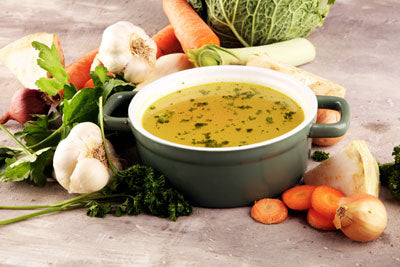
For Marielle Alix, there is a delicious alternative to chicken broth: vegetable broth. Although it does not contain collagen, it is rich in all the minerals and vitamins contained in the variety of vegetables used for the broth. "It's up to you to multiply the combinations: in addition to the classic leeks, onions, carrots, add cabbage, fennel, tomatoes, eggplant, ginger!" advises the naturopath. Whether the broth is vegetarian or not, it must be consumed quickly (within two days, maximum three) but, good news, it can be frozen provided that all the ingredients used to simmer it are fresh. The smart tip? Fill ice cube trays with the broth to have your homemade bouillon cube in the freezer "instead of a" bouillon cube "!
Broth, the recipe
- 2 liters of water
- A chicken carcass with some meat left on it. Alternatively, a beef rib bone, or a few chicken thighs and wings. If you want a fattier, more nourishing result, ask your butcher for two or three marrow bones.
- 1 leek
- 1 carrot
- 1 onion studded with a clove
- pepper
- salt (but at the end of cooking)
- 1 dash of cider vinegar
Place the bones, as well as the vegetables, in the Dutch oven or casserole dish (which you do not use as a pressure cooker but just as a pot).
Cover everything with water.
Heat gently for several hours (don't hesitate to cook for 5 or 6 hours) without ever bringing to the boil. The broth does not boil, contrary to what its name indicates!
Remove the vegetables and meat and pass everything through a strainer to keep only the juice.
Set aside the vegetables to eat them later, after the broth cure, when your appetite and strength return and you can give your body some more work to digest.

The bowl: instructions for use
A name that sounds like a promise of elsewhere and roundness… And many of you have been seduced by its exotic, colorful andClean Eating side.
Bowl, who are you?
Did you say bouncy? It seems that its pretty name comes from the resemblance between the bowl and the generous belly of Buddha, but also between its vegetarian nature and the fact that this religion respects the living, hence its name Buddha bowl. The bowl is originally vegetarian, even vegan , and its principle is a joyful layering - a superposition of layers - or more precisely, a juxtaposition of healthy ingredients, again and again. Because it is indeed a question of variety, of minced meat, of beneficial association and almost of art!
Bowl, inside
Inside, raw, cooked , different textures so that the experience flatters the senses. To make a nice bowl, combine a variety of seasonal vegetables/fruits (carrots, cucumbers, radishes, fennel, salad, raw spinach, black radish, banana mango, pineapple, etc.), a legume (chickpeas, red or white beans), a cereal (quinoa, rice, buckwheat noodles) and seeds (sesame, flax, poppy, chia).
Instructions for making a bowl
Start by cutting all the vegetables and positioning your bowl. First place the cereal and the legume (about 1/3 of the bowl), then place the vegetables and fruits all around, separating each element into small groups so that it is very visual. Sprinkle everything with seeds (crushed hazelnuts, sprouted seeds, cashew nuts, or even seaweed, seeded pomegranate, etc.).
Poke bowl, the other bowl

The poke bowl is another version of this famous healthy dish. At the heart of the recipe: fish. When we look at the history of this dish, we can wonder if it is of Hawaiian or Japanese origin.
This is not surprising: the Japanese who left their country to work in the heart of the sugar plantations of the island of Hawaii (to the point of representing almost half of the population), strongly influenced the local cuisine. The poke bowl gave pride of place to fish, and in particular to tuna, seaweed, local herbs and rice. The fish, depending on the recipe, was marinated or not (poke, "diced", because the fish was cut... into cubes!). This dish was enjoyed almost everywhere, in the streets as well as in homes, as daily meals or as festive meals.
Today's Poke
No poke bowl without fish, that hasn't changed. If it originally consisted of red tuna or salmon, it is mainly the latter that is in the spotlight. Pay attention to its origin, prefer organic if possible. You can also find sea bream, shrimp, scallops. The protein variant also invites eggs, tofu, marinated meat in cubes or strips, to replace fish.
Never without the sauce!

And, good news, the sauce goes just as well with the vegetarian buddha bowl as with the poke bowl. Another good news is that the sauce acts as a marinade for the proteins in the poke bowl, so you kill two birds with one stone. The most classic sauce combines sesame oil, lemon (yellow or green), rice vinegar, salty or sweet soy sauce, garlic, powdered or freshly grated ginger. But around this base, anything goes! Add sesame seeds, garlic, chives or coriander, honey, teriyaki sauce, chili pepper, etc.
Social media star?
If you think you're bored making bowls, just browse social media and search for the # in question. More than 4 million posts with #bowl, more than 1 million for #pokebowl, 600,000 for #buddhabowl with an astronomical quantity of recipes, each more colorful and lively than the last. It's simple, summer and winter, it tickles our taste buds and never makes us feel guilty. Normal, it's THE clean dish among clean dishes .

The glow is also on the plate!
Yes, sun powder warms the complexion in winter and summer, pink blush reinforces the effect of cheeks bitten by the cold, iridescent powder leaves an irresistible halo... but what if the real glow was above all in the plate?
To understand"healthy glow and pretty complexion" nutrition , all you need to do is review our classics. Starting with the composition of the skin ! It's simple, made up of three layers (the epidermis, the dermis and the hypodermis), the skin is made of around 70% water (like the rest of the body), almost 30% proteins, 2% fats and a little less than 1% minerals and trace elements. So, what could be better than offering it, on a platter, something to nourish its fundamentals to regenerate?
When the skin is thirsty…

Is it made of water? Give it a drink, even before it gets thirsty. You will do good to your stratum corneum, a kind of wall made of cellular bricks and cement which are mainly lipids. This famous stratum corneum is responsible for the skin's water reserves. Drinking water and eating foods that contain it , not only allows you to continuously supply these water reserves to ensure optimal internal hydration, but also prevents leaks of these reserves. Indeed, regular water intake consolidates all the elements of this wall day after day. And if water is precious for what it provides, it is just as precious for what it eliminates: toxins, enemies of a radiant complexion.
When the skin is hungry…
It's easy, the ideal plate for the skin is the one that contains everything that composes it. It will thus be able to draw from it what it needs to regenerate itself. To satisfy the 30% of proteins that the skin is made of, offer it proteins. Whether of animal or vegetable origin, they provide the amino acids at the origin of the production of collagen and keratin. Add a portion of lipids to echo the 2% of fats that ensure the suppleness and regeneration of the skin. The latter will find there the essential fatty acids to constitute a quality hydrolipidic film to protect it from external aggressions. Indeed, fat and water form a dynamic duo to fight against water leaks and boost the cellular regeneration of the skin. And it is no coincidence that cosmetics, water-in-oil or oil-in-water emulsions, work exactly the same way but through external applications. Spice up your plate by adding copper, manganese, zinc (meat, seafood, pulses, fish, cereals) but also vitamins B, C, D, E, K ... in a word, bring the trace elements and vitamins essential for oxygenation, the vitality of the skin but also its daily fight against oxidative stress (pollution, sun, stress ...). You will find them in a varied basket at the market with seasonal fruits and vegetables , preferably organic, fresh herbs, quality spices and proteins from sustainable agriculture and necessarily short circuits.

A beautiful skin menu, one!


The more colors on your plate, the more vitamins ! The green of spinach, broccoli, salads and zucchini provides plenty of chlorophyll that oxygenates cells. The red of raspberries, strawberries and pomegranates is synonymous with antioxidants that fight against cellular aging. The yellow and orange of carrots, apricots, yellow peppers, tomatoes, pumpkin and sweet potatoes release beta-carotene, a precursor of vitamin A, which is irreplaceable for giving you that healthy glow we love so much. Are you tempted by a seafood platter? It's ideal for stocking up on zinc, which reduces imperfections by regulating sebum secretion.
For the main course, proteins sprinkled with good fat!

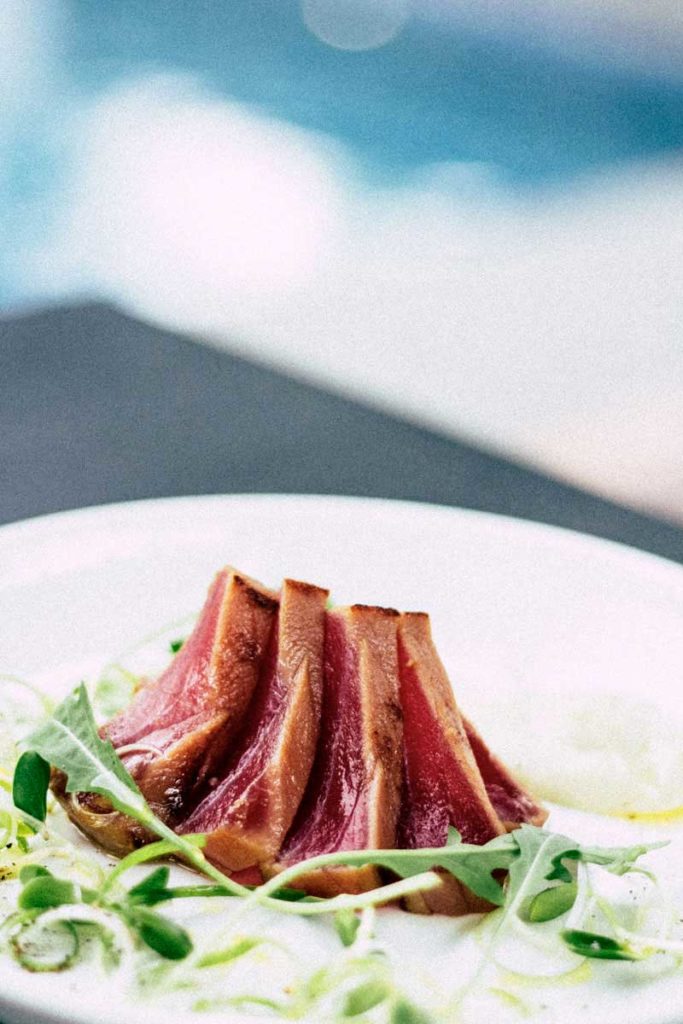


Eat eggs for vitamin B and A, selenium and zinc, quality fish and white meat for proteins that promote the production of collagen and elastin, which guarantee skin tone. If you prefer plant-based proteins from legumes, they also strengthen the firmness of the skin. Beyond the proteins in oily fish (salmon, herring, tuna, mackerel, sardines, etc.), there is also good fat known for its anti-inflammatory action. The same as that found in oils (rapeseed, flax, camelina, olive), nuts (walnuts, hazelnuts, macadamia nuts, cashew nuts, pecans), flax seeds and avocado. These fatty acids also ensure the suppleness of the skin. Don't forget to vary the sources of fatty acids for an optimal intake of omega 3, 6 and 9.
For dessert, fruit!

To banish dull complexion, limit added sugars. Opt for raw or cooked fruits, whose water intake plumps up the hydrolipidic film, such as raw vegetables, and gives the skin its plump appearance. Don't forget that refined sugar, which is very inflammatory for the skin, is the cause of dull complexion. The same goes for milk. Often poorly tolerated, it slows down digestion and leads to the appearance of small imperfections. Do you have a sweet tooth? Then opt for coconut sugar, stevia, dates or mashed bananas in your homemade cakes, this natural sugar is less inflammatory.
Finally, have the " acid-base balance " reflex by respecting 2/3 basic accompaniment (fresh vegetables, salads, but forget the acidic fries!) and a third of animal proteins (acidic). Finally, the secret to a glowing complexion is the healthy plate. And there, we understand everything... and we smile!

How to eat healthy without breaking the bank?
Shopping better, choosing certain foods over others or even rehabilitating dishes by making them healthy. 12 tips to follow to eat according to the rules of the art of Clean Eating without breaking the bank!
If you are a woman in a hurry, you may be tempted by ready-made meals. Except that ready-made meals are often synonymous with additives, trans acids and other delights that are not very kind to our scales, our health and our food budget. So, it's decided in 2022, we cook like a pro, all without spending too much. Here is a little survival guide!
1- Consume fresh and unprocessed foods
The tragedy in our modern societies? Everything is done to simplify our lives, but sometimes with serious consequences for our health. According to Anses (National Agency for Food, Environmental and Occupational Health Safety), we consume between 6.5 g (for women) and 8 g (for men) of salt per day. That's too much, way too much. The same goes for sugar . We're at 100 g per day, the equivalent of 20 sugar cubes. The ideal would be to reach 50 g for women, or 10 cubes, and 60 g for men, or 12 cubes. How is this possible? Because of hidden sugars and salt. Did you know, for example, that 5 slices of sandwich bread contain 1.5 sugar cubes? That in a slice of vacuum-packed ham, there is also sugar (in the form of dextrose for example)? As for salt, it also knows how to be forgotten and slips, unnoticed, into breakfast cereals, cheeses, bouillon cubes, etc. The moral: to eat healthily, you should avoid industrial dishes as much as possible and eat fresh and unprocessed foods. It's much better for your health !
2- Focus on plants

Raw or cooked , as a starter or main course, eating "green" is easy. The advantage? Organic fruits and vegetables allow us to stock up on vitamins and minerals and vary the pleasures throughout the seasons. To avoid the carbon impact, favor short and local circuits (buy directly from producers, it's better). Don't be tempted by strawberries in December or avocados in May. You can be sure that these vegetables have traveled around the planet before arriving on your plate. Especially since seasonal fruits and vegetables are much more accessible (price). Another tip: if you are comfortable with the idea of negotiating prices, you can go to the last-minute market and ask for a small discount. Finally, remember to garnish your yogurts with overripe fruits ( to avoid throwing them away ) and think about making soups with slightly stale vegetables .
3- Enjoy cooking


TV shows (do you know Norbert Commis d'office, on Saturdays on channel 6 Ter which "straightens out" the kitchen bandits or even Petits plats en équilibre by Laurent Mariotte every day on TF1?), but also many books /Instagram accounts of chefs and cooking enthusiasts are precious. Today it is quite easy to create boards on Pinterest ("easy meals", "desserts that throw", "meal ideas") to get inspiration while cooking. All the professional gestures are dissected and, even for the least gifted of commis, it is quite easy to get started. The secret to success? Set yourself a challenge (make a dessert that is known to be difficult, put more green in your dishes, etc.) and have fun! Learning to cook also means learning to make do with what is in your cupboard, to throw away less and to use the freezer better. And that's good because homemade food, which is all the rage, really costs less! The proof? According to Cerin (Center for Research and Nutritional Information), homemade food costs between 5 and 10 times less than a ready-made meal bought in a store! And the good news is that by cooking yourself, you can keep an eye on the amount of sugar and salt added, for example. This is particularly true for homemade baking, which can combine pleasure and weight without worry!


To read to get started: the collection of Petits plats en équilibre ( Foolproof desserts , Grand apéro , Grandes tablées , etc.), Éditions Solar, €8.95.
4- Learn to listen to yourself
Relearning to listen to yourself, to feel hunger and then satiety, also means relearning to eat less . In this way, you can reduce the proportions and appreciate more what you consume. How can you do this in practice? As in sophrology or meditation, the idea is to reconnect with your sensations (of hunger, but also of taste). To do this, don't hesitate to eat your meals in silence (without TV, without phone) and to refocus on your sensations, with each bite. Eating mindfully is as easy to explain as it is difficult to put into practice, with each meal.
Our advice: start by eating mindfully for three minutes, then five, then ten. Until you can eat a full meal. The advantage? You will eat less and better.
5- Appreciate water

Eating without drinking, what a strange idea. Water is a vital element for humans. To reduce your receipt and your sugar intake, we limit sodas! We (re)learn to appreciate water throughout the day. Added to a lemon juice (in the morning), or as an infusion before meals, promotes faster satiety. To avoid buying bottles of water packaged in plastic, do not hesitate to invest in filter carafes or, even more simply, to buy activated carbon sticks to place in your carafe.
6- Have fun

When you eat healthily, you automatically eat less. Saying goodbye to snacking between meals (because you're not hungry) doesn't mean you're not going to enjoy yourself anymore. You can definitely bite into a chocolate bar if you're feeling hungry, as long as you only eat a few squares. It's all about moderation and common sense. The day after a boozy and copious dinner (starter-main course-cheese-dessert) at a friend's house, you can compensate by eating lightly.
7- Start fasting
Beware of pure and strict fasts, they must be carried out under medical supervision. On the other hand, you can absolutely introduce yourself to the benefits of the 16-hour fast . The principle? Skip a meal (dinner or breakfast) in order to rest your body. During this intermittent fast, the body will draw on its reserves (especially glucose) to continue to function well. It is also beneficial for your figure.
8- Limit meat
We now know that excessive meat consumption is bad for our health (increased risks of obesity, cardiovascular diseases, cancers, etc.) and for the planet. On the environmental side, intensive red meat farming is, among other things, criticized for its high water consumption. What can we do in practice? Without becoming vegetarian, the idea is to limit our meat consumption to two or three times a week, and to buy more eco-responsible meat (organic, direct sales from producer to consumer, etc.).
9- Organize yourself differently

To adopt this new way of life, you have to change your habits a little. Eating healthier means shopping differently .
- First, sort out your cupboards, using the Marie Kondo method applied to the kitchen: I keep (a little), I throw away (a lot).
- Complete with the missing and essential elements for healthy cooking: seeds, whole foods, etc.
- Shop as you go, so that you prioritize buying fresh food.
- Make a shopping list and… stick to it!
- Plan your menus over several days in order to learn how to balance your menus over the week.
- Shop on a full stomach. It's silly, but you'll be less tempted to make impulsive (and not necessarily healthy) purchases, which are often expensive.
- Beware of fake promotions. Yes, it may be cheaper to buy three packets of biscuits on sale… but are they really the cakes you wanted in the first place? So beware of promotions that end up making you spend more. If you are loyal to a brand, taking the loyalty card (free) is often more advantageous.
10- Rehabilitate the homemade sandwich

Why not, from time to time, prepare a good homemade sandwich? With good bread (wholemeal or cereal) and foods that tick the right boxes (tuna-raw vegetables, eggs-cucumbers-tomatoes, etc.). You can easily replace mayo with hummus or (re)discover the benefits of olive oil instead of butter. You can also prepare one in the morning for your lunch on the go at the office. Another possibility for your lunch boxes, rehabilitate homemade soups (cheaper, less sweet, less salty than those from the store). Here too, you can quite easily prepare a soup and freeze individual portions for later (batch-cooking)!
11- Also think about bowls

Does bowl mean anything to you? Pronounced "bol" in French - we can't change our ways - this complete dish (served in a bowl) is the top trend in Clean Eating. The rule? Arrange fruits, vegetables, oilseeds, animal proteins or not, all without mixing them but arranging them by family, to create a nice visual effect. For inspiration, we recommend reading the book Bowls by Clemfoodie , Marabout, €16.90 with its many bowl recipes for lunch, dinner and even breakfast!
12- Buy in bulk
In most organic stores, there is a bulk section for cereals and dried fruits. In addition to the zero waste gesture , you save on the price per kilo and can quantify "custom-made" what you buy.

What is living food?
We are talking more and more about this "living" food that consumer society tends to forget. What exactly is living food? What are its benefits for your health? How to introduce it to your plate?
A long, long time ago, humans ate raw foods , berries or animals. Everything was consumed immediately because fire was then only a frightening and devastating element. But it was not strictly speaking a living diet. The first nutritionist to have made this concept official was Ann Wigmore, born in 1909 in Lithuania. When she was diagnosed with breast cancer, she decided to treat herself mainly through diet, which she changed completely by integrating only foods rich in enzymes and nutrients such as raw or fermented fruits and vegetables, sprouted seeds, certain cereals, nuts, herbal juices . A living diet, which can also be called raw foodism, praises the benefits of foods that have not been cooked and have therefore retained their nutrients and vitamins.
The “living” before the plate
According to experts, nutritionists, naturopaths, dieticians… the living has everything good. Why? Because living foods are balls of energy that transmit the latter to those who consume them raw. By transitivity, the living generates or, at the very least, maintains the living. Vital energy, vital momentum, vitality balance, gravitate around the same axis: the living. And, in an even more subtle way, when we are interested in this concept, we see further than the end of our plate.
Respect the vitality of the food
To enjoy the nutritional benefits of a food, it is not enough to cook it brilliantly. But to start integrating its vitality from the first contact… Because living food is born in the way we look at what we are going to put on our plate. Choose consciously , knowing the path taken by the food, visualizing or imagining the farmer who grew the wheat, the baker who kneaded the dough, the market gardener who harvested the fruits and vegetables. The living is born with what each person impacted in the production process was able to (positively) put into it. Of course, not everything is controllable and there are inevitably imperfections, jostling, haste, stagnation in warehouses, etc. But the more good intentions and values there are around production, harvesting, distribution, preparation, the more the living is respected. The human being being a being of vibrations, polarities, energy, he breathes what he is into what he prepares. Thus, a meal cooked in haste, without pleasure and by constraint, will not have the same flavors as one that will have been prepared by devoting the right time, the right intention and pleasure.

Because, as Dr. Pierre Joyau, author with Cyrile Laporte of "The New Food Revolution " published by Mango, likes to remind us, "We are what we eat, what we think, what we breathe, what we move" , being aware of this is already putting life into your diet. And these notions, encounters between energy and nutrition, are seemingly nothing, coming from quantum sciences.
The “living” on the plate


Eating like we do in the blue zones , from Lomo Linda in California, to Okinawa in Japan, via Ikaria in Greece or Nicoya in Costa Rica, means preferring plants and raw foods by combining them with a healthy lifestyle, made up ofphysical exercise , quality rest and social connection. This virtuous combination alchemizes living food. Raw foods are in their whole (and living) form and not broken down, dissociated and "dead". Indeed, life is created thanks to enzymes that are at the origin of all chemical reactions inside the body. These enzymes are proteins whose role is to generate chemical reactions at the heart of cells. However, they are quickly destroyed by cooking (from 42°!) in the same way as many vitamins (from 60° for vitamin C, 90° for B, 100° for minerals and trace elements). Without them, foods lose much of their virtues. It is therefore by sparing foods from destructive cooking that raw foods retain their living character.
Attention to conservation
It is important to ensure that food is properly stored and that expiry dates are respected in order to avoid any risk of poisoning. While bacteria, viruses, fungi or parasites proliferate in all foods, they are particularly likely to multiply in raw foods, as they are no longer neutralized (completely or partially) by cooking. Beware of sprouted seeds and “homemade” fermented foods because these two preparations must be made in strict compliance with the key steps, at the risk of becoming real toxic potions. So, are we going for it anyway? Yes, because cooking everything and the meager space left for raw foods on our plates creates a real deficiency in fundamental nutrients. The threshold not to be crossed to benefit from “raw” status? The fateful 42°. This is why some restaurants have opted for this name that only insiders can understand…
The typical living plate


Odile Chabrillac, naturopath, Director of the Institute of Humanist Naturopathy, advocates raw food for around 70% of our plate, "while adapting to our living conditions, our climate, and the temperatures". The favorite plate of naturopaths is composed of egg yolks, good quality and organic fresh dairy products, oilseeds such as almonds, hazelnuts, all kinds of nuts, sunflower seeds, sesame, seawater or freshwater algae, certain sprouted cereals and legumes, fresh pollen, mushrooms, fresh or dried fruits, raw vegetables and their juices, avocados (seasonal and locally produced), coconuts, herbs, spices, condiments, chlorophyll, homemade plant-based milks (made from almonds, oats, hazelnuts, etc.), raw chocolate. But eating alive is not limited to eating raw (for example, raw meat and fish are dead…), the rule is above all to favor natural food , unprocessed, unpasteurized, organic, without fertilizers or pesticides, most of the time sprouted or lactofermented. Everything that is sprouted, in full growth, is a real “bomb” of nutrients in motion, pushed by this surge of life of the fruit or vegetable in the making. Also think about the birch sap cure, harvested in the spring, it is a real cure of rejuvenation and detox for an organism that is just waiting to get out of winter.
Living is better because…
Super energizing, living food allows you to stock up on quality nutrients and avoid the post-meal energy slump. It also ensures a fresher complexion, hair, skin and nails in top condition with, as a bonus, lower cholesterol, fewer cravings and a boosted immune system. The opposite of processed foods, living foods have no drawbacks and do not create deficiencies. Super modified, too sweet, too fatty, processed foods are very costly in energy for the body which must over-adapt to process them and limit their harmful effects. The best known? The acidification of the blood which causes the body to compensate by drawing on its mineral reserves (in particular in the nails, hair, bones, etc.) to neutralize this acidity. In addition to nutrients, living foods are rich in antioxidants, cell protectors but also in fiber, the key to good transit and natural and daily detoxification. And while switching to all-raw is neither essential nor suitable for everyone, introducing it gently into your diet is a health card to play without hesitation. Eating cooked and hot is not only comforting but also not without its benefits: a good soup obtained after gentle cooking provides its share of vitamins and fiber. As a bonus, cooking is already a form of first digestion of food and allows people with a lazy digestive system to eat comfortably.
The living to drink too!

Water is the vital drink par excellence, it is what allows cellular communication, pure communication, carrying a message unpolluted by the addition of sugars, tea, coffee, fruits. Water can then fully play its role as a cellular catalyst. In addition, but never instead, we can drink infusions of fresh plants, tea, quality coffee, fermented fruit juices. We exclude empty and dead industrial drinks from our shopping cart. Also overprocessed, pasteurized fruit juices and vegetable milks, often polluted by added sugars and salts, have lost almost all of their vitamins.
Live drinks are fresh, seasonal, and unpasteurized. They must be kept cool, away from light, and enjoyed within a very short time. Cold-pressed to preserve minerals and vitamins, fresh fruits or oilseeds are respected and remain a source of energy and vitality. To avoid excess sugar , choose juices that combine vegetables and fruits such as beetroot, carrots, apples, ginger, or broccoli, ginger, and turmeric. Also opt for fermented juices, which are alive thanks to the presence of a natural bacteria, ideal for the good health of the microbiota.
Recipe for homemade juice.
- You need a juice extractor, a one-liter bottle, a kilo of vegetables of your choice (carrot, celery, beetroot or other), an onion, 150 grams of cabbage, 2 tablespoons of sauerkraut juice or a sachet of ferments for fresh vegetables (in a health food store), two teaspoons of salt.
- Peel your vegetables, add the onion, cabbage and put everything through the juice extractor. Pour the juice into the bottle and add the sauerkraut juice or the sachet of ferments.
- Close the bottle tightly but remember to open the cap once a day to release the pressure naturally created by the fermentation of the vegetables. Do this for three days in a row, taking care to shake the bottle every day, morning and evening, to prevent the mixture from going moldy.
- After four to five days, fermentation is complete, you can then store your juice in the refrigerator to stabilize it and consume it as you wish.
- Also alive is birch sap, which is harvested every year in the spring and sold once a year and consumed as a three-week cure to both detoxify and revitalize the body.
Because instinctively the living calls to the living, get started and gradually introduce raw, fermented vegetables and juices into your menus. Your microbiota, which lines the digestive tract, is alive and carries around ten thousand billion bacteria that constitute the first ramparts of the immune system, the very one that protects us from all kinds of pathologies. And allows us to simply stay… alive!

Healthy aperitif!
If there is one warm moment, it is the aperitif. Of course, it has become virtual on Zoom or Skype during the lockdown, but its main purpose is sharing, relaxation and conviviality. And if it is healthy, it is all good.
Forget about sandwich bread, it contains almost nothing but white flour, water, oil and sugar. Swap it for smart breads or even other more unexpected spreads. Clean aperitifs are possible and it's even easier to adopt than you might think.
Bread fan? Say yes to buckwheat!

This cereal is light and digestible because it is gluten-free. Toast the slices of buckwheat bread and spread them with different homemade recipes like guacamole. Provided that the avocados do not come from the other side of the world and this guacamole is spiced with quality spices such as turmeric, berries, pepper, a touch of chili rather than seasoned with ready-made mixes often enriched with additives (not recommended) and colorings. Also dip into hummus, tuna and potato rillettes, cauliflower creams, eggplant or tomato caviars and the whole family of fresh goat cheeses.
Fall for the shuttles…
Endive or iceberg, salads that offer firm leaves. They have the merit of serving as a vegetable "support", zero calories, gluten free. They lend themselves perfectly to associations with smoked salmon (organic), salmon or sea bream tartare, garnished with lime, small cubes of mango, Roquefort or blue cheese, cucumber strips, marinated zucchini or avocado, cod liver. These navettes are ideal for placing salmon or trout eggs (superfood full of omega 3), provided that they have previously been spread with hummus or a thin layer of vegetable cream, silken tofu, quality crème fraîche or raw butter.
Homemade toast?
Make your own dough with seeds, almond flour, flax and water. Mix everything together and stretch this dough on the baking sheet to make a kind of big baked cracker. Once cooked, break them up to make individual portions for future spreads.
Verrines and other treats!

The verrines, or large individual spoons, highlight the colors of your mixtures such as: shrimp + pineapple, langoustines + clementine supremes, shrimp + avocado, salmon + cucumber curry, scallop tartare + mango, it's a cocktail of proteins and trace elements from the seafood side. Other favorite verrines: cucumber + goat cheese + candied tomatoes (or fresh depending on the season), but also the pumpkin or coral lentil velouté "upgraded" by the addition of foie gras... if you like!
Essential and full of vitamins: vegetables, seasonal only, such as radishes, black radish, cauliflower heads with lemon, salt, pepper and turmeric or to dip in a sauce of fresh cheese, salt, pepper and fresh herbs. But also large mushrooms stuffed with homemade fresh cheese, garlic and herbs (or not, but choose the least fat possible). Also think about homemade puff pastries (brick sheets and spinach + feta, minced chicken breast with curry).
It's a piece of cake...

For savory tarts, think outside the box by opting for different bases: old-fashioned mustard or tapenade on the bottom of the puff pastry, on which you add quick-cooking vegetables such as tomatoes (homemade crushed and preserved in the freezer or in jars), zucchini, spinach. In classic quiches, replace the crème fraîche with goat's cheese, Gruyère with mozzarella or ricotta, the egg, crème fraîche and milk base with silken tofu mixed with cooked spinach and a hint of vegetable cream. In short, swing your quiches and other tarts.
Chips then!
Multi-colored vegetable chips are pretty and very easy to make in the oven with ribbons or slices of carrots, beetroot or in a pan with kale.
Nice crumbles

More original than gratins, vegetable crumbles are prepared with potatoes (and a drizzle of truffle oil!), the pumpkin and chestnut duo, but also broccoli, cauliflower, mashed potatoes and celery, pan-fried mushrooms and onion compote. To twist this puree into a crumble, simply add a crumble base, the variation of which can be made with crushed seeds or rice flakes, parmesan and a drizzle of olive oil. Sprinkle this preparation on the vegetable casseroles and bake for about ten minutes.
All with a glass of…

Good red wine, organic or natural, rich in polyphenols, it is almost the ideal aperitif. We can be satisfied with a glass of very good wine, which we taste in full awareness, a bit like during a wine-tasting course or a tasting session. It will serve as a setting for all the spreads, cheeses, small savory tarts. For the festive side, treat yourself to a glass of good champagne or sparkling organic wine. Accompanied by cooked or raw vegetables, they see their acidifying character diminish.
Always place beautiful carafes of water on the coffee table or buffet, pure or flavored with star anise, fresh herbs or slices or rounds of seasonal fruit. If you have not yet managed to give up plastic with mineral water bottles, now is the time to choose to offer "grands crus" such as Rosée de la Reine, (in organic and health food stores) or the more accessible Mont Roucous, ideal because they are very weakly mineralized, they have the advantage of not tiring the kidneys.
And now it's time to toast... to your health!

Fasting, for or against?
For most, fasting remains a curiosity, for others a lived experience and for others still a very unappealing idea. So, should we go for it or not? Before deciding, let's take stock.
What is fasting?
By definition, fasting means "to deprive oneself or be deprived of food". Fasting is in all cases, not eating any solid food and being content to consume liquids, most of the time, water, herbal teas, herbal or fruit juices according to the diet observed. The objective is to put your body to rest without risking dehydration. The duration of a fast can range from 24 hours to several days. But, before that, it is necessary to take stock with your doctor or naturopath on your general state of health. You should not start such a diet when you are tired.
Fasting for all?
Fasting is completely forbidden for pregnant women, people with kidney failure, heart disease, diabetics, people with infectious diseases or under medical treatment (because fasting implies not taking medication), people suffering from severe or non-severe eating disorders (this diet risks disrupting the eating behavior of a person already suffering from such disorders), people who are psychologically depressed, and people who are immunocompromised.
The contraindication is relative and temporary for people in a period of convalescence or those who are tired, those who have a great need for energy due to very demanding physical work or forathletes (the real ones!). All will refrain from embarking on a fast at this time in their life. They will wait until they have regained good vital energy before considering it.
In any case, we approach this dietary restriction by having taken care of our liver beforehand (we pamper it with ahealthy diet (more basic than acidic because fasting causes temporary acidification), good hydration, a daily boost with a hot water bottle placed on the liver (in order to support it, especially in winter), good breathing (yes, yes, it can be worked on), good physical shape with daily exercise (the better quality muscles we have, the less fasting will melt them).
Why is it good to fast?
Fasting will allow the body to draw on its reserves and get rid of what it does not need. A sort of internal bonfire, this practice allows you to consume excess sugars and fats, while preserving good resources and reserves.
But be careful…
Be careful, fasting can sometimes trigger violent reactions such as nausea, vomiting, diarrhea, pimple breakouts, migraines. Because the body has started a major cleaning and this is not always done gently. Hence the importance of being accompanied during this period of great detoxification, only a health professional will be able to tell you if it is a passing reaction, corresponding to the drainage of the liver, or if it is a disproportionate and too exhausting reaction that requires stopping the treatment.
Fasting, but accompanied
You can practice alone at home, planning a real rest during the treatment but (we repeat!) it is essential to consult a health professional before, during and after. The ideal, and even luxury, is to start during a treatment, a group retreat, but again by carefully selecting the place and the accompanying staff. The organizer must first have you fill out a health questionnaire, organize an interview with you to find out what your motivations are, what the context is and to better understand your lifestyle.
Intermittent fasting, lighter?
It is very fashionable and consists of cleaning and purifying your body. On the same principle as a total fast of one to several days, it is limited to a deprivation of food for 12 to 16 hours. Concretely, it is like skipping a meal but consciously, not because you stay glued to your desk with your nose in your screen. And by adopting a good clean and balanced diet besides. You can have dinner and go straight to lunch (skip "breakfast") the next day. By depriving it of a meal, the body will systematically draw on its sugar reserves first. It finds it in the blood and/or in the liver. It is the long fast, which will draw on fat reserves (from 2 or 3 days of fasting depending on metabolisms). If, depending on your lifestyle, it is easier to skip dinner, you have a snack around 5:00 p.m. and the next meal will then be breakfast. On the other hand, we continue to hydrate! Intermittent fasting can be practiced over a week if we want to lose weight or regularly, once a week, if we feel that we are gaining in digestive comfort and overall well-being.
The mono-diet, a gentle little fast


This is surely the ideal solution for a gentle diet. The principle is simple: you only eat one food or a family of foods for one or more days. It is a fast that does not bear its name but which has many advantages, starting with that of familiarizing you with the very idea of excluding foods but gradually. It is also a psychological preparation when you consider one day a "real" fast! The physiological advantage of the mono-diet? the deep rest of the digestive system. By concentrating on a single food, digestion is facilitated, less expensive and less tiring. The mono-diet is beneficial on an energetic level (it restores a measurable tone), on a digestive level (it boosts digestion in the long term), it increases concentration and eliminates feelings of heaviness and the post-meal energy slump.
We focus on one food such as one or more fruits (mono-diet of apple, banana or both), a cereal such as buckwheat or rice or quinoa (or both alternately), one or more cooked vegetables, broth or vegetable juice. We banish cold in favor of room temperature which facilitates digestion. The contraindications are the same as for fasting, even if it is more demanding.
In conclusion, yes to fasting which corresponds to a need to cleanse one's body but it is never done lightly, without prior assessment with a health professional. More reasonable, the mono-diet and intermittent fasting, two gentler approachesto Clean Eating (Healthy Eating). But whatever the method chosen, the main thing is to remain faithful to the values of eating well every day, all year round (healthy, seasonal, local, raw, organic) and with joy!

Fermentation, why is it so good?
Lacto-fermented foods have fans and we know why. Absolutely rich and full of promise, these foods are the allies of our microbiota and our immune system. Among other things…
Lacto what?
Lacto-fermented foods are subjected, to the obvious, to lacto-fermentation, that is to say a preservation process that involves maceration without any oxygen supply. During this stage, which lasts from two days for fruits to five or six days for vegetables, the good bacteria (called lactic) proliferate. Be careful, false friend, they have no link with milk or lactose. It is the fact of mixing the plants with salt and water, or even directly with the bacteria responsible for the fermentation reaction, which gives rise to lacto-fermented foods. The hermetic sealing of the containers in which the food is immersed prevents oxygen from sneaking in. Because if oxygen oxidizes, it is in no way useful in the fermentation process, quite the contrary. It prevents lactic bacteria from developing. These will very quickly become hungry and to "survive", they will reproduce like any living being. They must feed on sugars (fruits and vegetables naturally contain them) and it is these same sugars that they transform into lactic acid. But then are these foods doomed to become more and more acidic? And this is where nature is magical: no! Because once a certain level of acidity is reached, the process stops and the conservation can last for months. It's up to you to make pickles, sauerkraut, miso, kefir, kombucha, garlic cloves and other fermented pickles, either homemade or purchased in stores (organic or natural).
Lacto-fermentation means more life!
1- Lacto-fermentation boosts the immune system
If the intestinal flora (often maintained with probiotic cures several times a year) contains several billion bacteria vital for the proper functioning of the body, we can give it a boost naturally through diet. The more we help it, the more it produces probiotics to drive out the hordes of bad bacteria, viruses, fungi, parasites that have broken into the body!
2- Lacto-fermentation upgrades foods
Indeed, almost all foods deserve to be fermented. If sterilization, high-preservation, freezing, are very practical, at the very least they leave the nutrients and vitamins intact but they never increase the nutritional qualities. Only lacto-fermentation has this quality. How? The reaction created by the proliferation of good lactic bacteria increases the quantity of certain vitamins in foods (notably B and K). In addition, it promotes the assimilation of zinc, magnesium, calcium and iron and improves the quality of the intestinal flora, also reducing the risk of intestinal porosity.
Fermentation gurus?


If most naturopaths strongly recommend eating lacto-fermented foods, it's because they are real little bombs of energy and benefits. A bit like sprouted seeds, fermentation holds a special place on the podium of health nutrients for experts. For Marielle Alix , holistic coach and naturopath, as well as Barbara Tron , naturopathy consultant and creator of the Jolies Tripes website, lacto-fermentation is almost second nature! So much so that Marielle, creator of "Échappées méno-glam" (wellness getaways intended for women approaching menopause or menopausal) includes a whole chapter and practical workshops on the program around lacto-fermentation and fermented foods. Barbara, for her part, after preparing sauerkraut, kombucha and other kvaz, decided to create her Ateliers Jolies Tripes to sell her production and share her know-how.
Expert advice
Barbara, why are fermented foods necessary?


"Fermented foods are alive, they are natural probiotics. A dense and diverse microbial community interacts with our microbiota which has a positive effect on health. Fermentation breaks down certain foods into more assimilable and digestible molecules, such as soy, for example, which is very indigestible at the base. Once the soy is fermented, it gives miso, tempeh, very rich in quickly assimilated amino acids (proteins). The same phenomenon occurs with the fermentation of gluten, it becomes more digestible. Fermentation also increases the bioavailability of minerals present in foods. In addition, it constitutes "a form of predigestion". It produces new nutrients such as vitamin B (folic acid B9, riboflavin B2, Niacin B1 and biotin, B8). It is also a source of vitamin C. Its antioxidant action is remarkable, it eliminates free radicals and therefore has an anticancer action. Finally, lactic bacteria, produced by the microorganisms responsible for fermentation, also produce omega 3, essential for cell membranes and the immune system.
How often do you recommend consuming them?


"We need to vary the fermented products we consume to diversify the bacteria in our microbiota . The ideal is to include them every day in each of our meals, either by mixing them into our dishes or by consuming them separately. Ferments are so delicious that a spoonful of sauerkraut, a glass of kombucha or kefir complete the daily diet!"
Your advice for introducing fermented foods into menus when you are not used to them?

“I use fermented vegetables, sauerkraut, kimchi, etc. in salads. These are delicious ingredients that make salads more attractive and tastier. They can be used as an accompaniment to meat and fish, one or two spoonfuls on a plate is already perfect! With the good weather back, vegetable, rice, quinoa pokeballs … they go perfectly with these useful toppings! Otherwise, a glass of kombucha, kefir in the morning or between meals is delicious, a glass of kvass before a meal whets the appetite. My other tip is to ferment garlic that you cook with, you can add it to hot sauces. And so that their use becomes a reflex, I put fermented foods on the table at each meal. These are new flavors, you have to get used to them, after that, it becomes a habit! And to get started on your own, the ideal is to start with workshops. I imagined some around kimchi, sauerkraut, all kinds of vegetables, fermented drinks like kombucha, beetroot and sweet potato kvass. You can even learn how to make bread, fermented yogurts. But, a priori, vegetables and fruits are the first steps of the workshop!
Marielle Alix, why do you advocate fermented foods?
"It is always said (especially in Chinese medicine!) that to have abalanced diet , you need spicy, sour, sweet, salty and bitter. However, we are not really used to sour and tangy. I discovered these flavors with Donna Schwenk, an American who claimed to have overcome certain pathologies by regularly consuming lacto-fermented foods and drinks. Fully convinced, I started to cook my kefirs and sauerkrauts. It is no coincidence that we find these foods in Eastern Europe (sweet and sour pickles, kefir, cabbages) in Japan (soy sauce, miso, tempeh), or in Korea (kimchi). And at home, we forget it but wine, bread, cheese, so emblematic, would not exist without fermentation! Beyond this tradition, fermentation is essential for digestion, general vitality, beauty and skin health (fewer spots thanks to good bacteria!). And what is less well known is that lacto-fermentation plays a role in regulating appetite. Because they serve as "expanders" for nutrients and vitamins, lacto-fermented foods are more quickly satiating.
Your favorite fermented food?
“Sauerkraut, but also kefir! It is rich in lactase and helps to better digest the lactose in dairy products. I prefer kefir made from plant-based milks, especially coconut milk. Where cow's milk secretes mucus, a breeding ground for bad bacteria, kefir secretes mucus, but good bacteria! It lines the mucous membrane of the digestive tract with good bacteria and boosts the intestinal flora, the pillar of our immune system.”
How do we get started?

“You need vegetables or fruits, salt and water. Personally, I add ferments to vary the type of microorganisms. And since I make my own sauerkraut, I collect half a cup of brine to lacto-ferment the next one! To start, you can also buy specific probiotics (Bio Kult) or well-fermented sauerkraut from Alsace Saveurs (alsacesaveurs.com). You can also follow the steps by steps on my reference site: Ni Cru Ni Cuit (nicrucicuit.com). To start, opt for vegetables (cabbage, pickles, carrots, radishes), then you need large glass jars, salt and water. Above all, introduce them gradually because they are super powerful! At first, four tablespoons of vegetables are enough. The flora gradually changes, this gives good bacteria which will generate the production of vitamin C and B. We start by buying small jars of sweet and smoked kimchi, sauerkraut with dill and cucumber or sweet and sour beetroot (at Jarres crues on the Pourdebon.com website).
Do it yourself
- Clean your fruits and vegetables.
- Peel them, cut them into the size of your choice
- Put them in a jar
- Add the chosen herbs and spices (dill, garlic).
- Add sea salt (two tablespoons) and optionally two tablespoons of sauerkraut juice.
- Pour in spring water, making sure to leave a centimeter between the water and the top of the jar. Immerse all vegetables or fruits well.
- Close the lid and leave at room temperature for about two days for fruit, five minimum for vegetables.
- The result is good if the flavor is sour but sweet and good! If the appearance is questionable (moldy, unpleasant smell), throw them away and start again!
To go further
We sign up for a Meno Glam getaway by Marielle Alix for the “well in your belly” workshop where she discusses lacto-fermentation and offers tastings of lacto-fermented foods to provide healthy and natural solutions to be well in your belly: mariellealix.com. We choose one of Barbara Tron’s workshops, info on jolies-tripes.blogspot.com to start practicing!