


How to decipher your clothes?
"90% of buyers want more transparency on clothing prices and how they are made" More transparency, yes, but how? In the food and cosmetics industries, applications such as Yuka or Clean Beauty appeared a few years ago to help buyers decipher their products.
In fashion, however, it is only much more recently that awareness has arisen. The tragedy of the collapse of the Rana Plaza in Dhaka, Bangladesh in 2013, revealing the harsh working conditions of workers working for major fashion brands, played a large part in this.
Today, how can we decipher our clothes to dress responsibly ? What solutions exist to find out how a garment is made? Are there reliable applications that can help us make informed choices?
Need for ethical and eco-responsible fashion
Faced with the rise in ecological and health risks for the planet, many consumers are reviewing their priorities and consumption patterns. They want to buy in a more informed, more conscious, more ethical way. They want to consume “better”. Transparency on the content and manufacturing of purchases has become a prerequisite. However, clean fashion has only recently come to the fore, probably because of its glamorous side which has long been an illusion or a screen. To “know everything” about products, applications have taken a prominent place. So much so that they have forced food and cosmetic brands to review their formulations! In fashion, creating an app is much more complex to achieve, if only because of the absence of data linked to barcodes on clothing.
Apps that decipher eco-responsible fashion
Dressing according to your values, your commitments and with style has become much easier thanks to applications, even if they are still few in number in fashion.
The Clear Fashion App

The two designers, Marguerite Dorangeon and Rym Trabelsi, asked themselves the question of transparency to create their Clear Fashion application with the ambition of responding to it in a comprehensive manner. By downloading this free application, we discover the social and environmental impact of our clothes or those we would like to buy. All via a rating system out of 100, according to 4 themes: environment, humans, health, animals. More than 150 impact criteria are taken into account. The method is 100% independent, thanks to the survey responses and the support of a committee of experts. "Brands have no influence on our evaluation system" assure the designers. Currently, more than 300 brands have their commitments deciphered and if the brand you are looking for is not referenced, you can request its evaluation. Brands can send their data and updates themselves.
How does it work?
Simply by scanning the garment's barcode or the composition label. Because if the brand has not provided the information related to the garment's barcodes itself, the application will not be able to read it. For example, The North Face is indicated as not having wished to respond to Clear Fashion. The application therefore has no data on the production sites or on a certain number of practices. On the other hand, it has awarded scores according to the information found by the experts, which indicates 42/100 for the environment (Medium risks), 35/100 for humans (High risks), 51/100 for health (Medium risks) and a mediocre 7/100 for animals (Very high risks). The brand can provide feedback at any time. Details on the brands that participated are available on the website www.clear-fashion.com, such as Sézane, Veja, Decathlon, Adidas, etc. A search for the top ethical brands can be done by category (sweaters, skirts, jeans, etc.) and a Clear Fashion impact assessment is also available. The founders are looking for ambassadors to help them amplify their mission and accelerate the movement, Go!
The Good on You app

Launched in 2015 in Australia, then in the United States and other countries, it is the first eco-responsible application to have rated fashion brands.
Internationally, the Good on You application rates 2000 brands according to three ethical criteria: the environment, animals and humans, based on their relationship with the environment, wildlife and working conditions.
How does it work?
Just type in the name of a brand to see the score it is given. Brands are ranked according to five scores: very good 5, good 4, it's a start 3, not good enough 2, we avoid 1. A text justifies the brand's score. You can also find alternative ethical brands if the brand under scrutiny has a bad score.
The application and its website also offer interesting content, such as the 10 most ethical and “sustainable” French fashion brands (or German, American brands, etc.), the most ecological hoodies or glasses, etc. You can directly buy clothes from clean brands by linking to their site.
The marketplace for eco-responsible fashion.
There you can choose clothes from committed fashion brands offered by 'market places' like Wedressfair, which brings together 60 brands, according to a charter visible on their site such as for example "Each item of clothing contains at least 90% eco-responsible materials."
Ethical fashion logos
Just look directly at the clothes to see if there are any logos.
- Oeko-tex guarantees textiles without toxic products for the body and the environment - but which may be made from synthetic and therefore polluting fibres.
- GOTS is a label that ensures that the product is organic and manufactured in an environmentally and socially responsible manner.
Clean fashion advice
It is recommended to wash new clothes twice, in order to eliminate some of the heavy metals, formaldehyde and dyes which are carcinogenic, nano particles and other endocrine disruptors…
With the rise of awareness at all levels, applications and means of deciphering clothing and accessories are promised a bright future!

What is Clean Fashion?
For three years, fashion and the pollution it causes have been under fire. In fact, fashion is the second most polluting industry in the world .
According to Greenpeace, more than 100 billion items are produced each year, it's dizzying! French women buy an average of 30 kilos of clothing and accessories per year. Each kilo of linen pollutes 200 liters of water.
So, brands are reacting and new expressions are emerging: ethical fashion, eco-responsible fashion, sustainable fashion, “clean” fashion, transparent fashion, respectful fashion, “upcycled” fashion, conscious fashion, “sustainable” fashion and of course clean fashion . If the word clean is already widely used in cosmetics, there is no official definition. So, what is the definition of clean fashion? How to find your way through all these new “fads”? An overview.
A real acceleration since the 2020 health crisis

Unsurprisingly, clothing purchases fell sharply in 2020 and well-known brands went bankrupt, both in the US and in Europe (J. Crew, American Apparel, André, Camaïeu, Naf Naf, etc.). Consumers have had plenty of time to ask themselves: do we need so many clothes in our closets? Is it reasonable to buy more and more clothes that will last one or two seasons, sometimes at low prices? To support a polluting industry that destroys a huge amount of its unsold items?
In Sweden, the "köpskam" movement, shame of shopping, has been gaining momentum since 2018 and specifically targets the act of buying clothing. Like the "flygksam" movement, shame of flying, which had been much talked about worldwide. But it is the circuits of the fashion industry and its process that need to be rethought.
Several fashion designers have themselves written manifestos and charters for environmentally friendly fashion and are already making collections in this sense (Marine Serre and Dries Van Noten in particular). In May 2020, 600 designers and buyers called for profound changes in fashion via an open letter.
The first questions and awarenesses concerned the use of fur, in the 80s. Over the past five years, everything has accelerated via social networks with the rise of the "vegan" philosophy. To think that Stella McCartney had initiated this movement in the early 2000s!
Under pressure from consumers and animal rights activists, many major brands have stopped using fur in their collections (Burberry, Versace, Gucci, Armani, Givenchy, Ralph Lauren, Calvin Klein, and also the luxury retailer Net-a-porter.com, etc.). However, the synthetic materials used to make these fake furs are also problematic, as they are highly polluting. Research is increasing to find a satisfactory eco-friendly fur. Frédéric Godart, fashion sociologist and professor at HEC, states, "In about twenty years, there will be no more products of animal origin in fashion." Goodbye leather, silk, wool...
From Fast Fashion to Clean Fashion
We all remember those terrible images of a building housing a textile factory collapsing in Bangladesh in 2013, killing more than a thousand people. A whole part of the country's economy is based on fast fashion , which is another problem. How can we slow down and stop the incessant "Fashion Weeks" events that are causing massive overproduction? During the first lockdown, many brands transformed the constraint into an opportunity to imagine digital events, some of which were particularly creative.
Anti Fashion, a virtuous initiative for Clean Fashion
The high priestess of trends Li Edelkoort published her Anti Fashion manifesto in 2015. Originally to denounce the absurdity and obsolescence of the fashion system, across its entire chain. It was a real detonator for Stéphanie Calvino, who then launched the Anti Fashion Meetings in Marseille in 2016. Alerted by the fact that "no one teaches young designers to produce differently or the public to consume differently", these days have a success that grows every year. And other independent players are setting up training courses, such as the Moocs of Annick Jehanne, President of FashionGreenHub.org, an association of fashion and textile business leaders founded in 2015, whose last Fashion Green Days took place in January 2021.
Upcycling, a Clean Fashion option?
Upcycling , or making something new out of something old, is indeed part of clean fashion in the sense that it offers answers in terms of sustainable fashion and circular economy. This allows brands to have a 'green' bonus! The giant H&M understood this well and launched its "Conscious Exclusive" collection in 2012, which uses, for example, plant waste to replace synthetic fibers, like the Vegea grape 'leather' made from post-harvest grape skins, seeds and stems. And it's even better when they are associated with clean dyeing methods - information rarely communicated to the consumer. Cotton can be organic and extremely polluting, because of its water consumption and the chemical dyeing process! Moreover, it is better to use linen, which is biodegradable, consumes very little water and in which "everything in the plant is useful and used" according to the Uniqlo brand, which moreover does not use chemicals at the different stages of processing its premium linen.
In any case, upcycling stimulates innovation and creation. The young designer Marine Serre (winner of the 2017 LVMH prize) is one of the best representatives of this process and her recovery of old clothes is astonishing. Also worth noting is the work of the Andrea Crews label since 2002 and the Les Récupérables brand, founded in 2016, which recovers non-compliant fabrics and fabric scraps from workshops. A great idea, like all the anti-waste food initiatives (ugly vegetables, Too good to go, etc.).
Eco-responsible fashion, a response from Clean Fashion?

At the end of 2019, the French Fashion Institute estimated that sustainable fashion already represented 7 billion euros in turnover. Large distributors and manufacturers therefore have every interest in taking into account this strong trend as well as consumers' sensitivity to the impact of consumption. A new attitude that is part of Clean Fashion.
- Carrefour has committed to ensuring that its textile collections sold under its Tex brand contain 100% sustainable and traceable materials by 2030. This will reduce the environmental impact of their supply chain and packaging. Work across the entire value chain is to be commended, even if 2030 seems like an eternity, given the acceleration of biodiversity and climate degradation.
- Zalando has included a sustainable fashion offering, called "Small steps, big impact." And incredibly, by 2023, this European leader will only distribute brands with eco-responsible standards! It remains to be seen how these standards will be defined.
- Zara has announced that it will "review its quality standards and train designers in circularity." This would still require these giants to produce less, which is not guaranteed!
- Kiabi aims to be 100% sustainable by 2030.
- Reformation, one of the historical references, born in San Francisco in 2009 is the eco-cool brand of celebrities, carrying a great humor via its slogan: "Being naked is the #1 most sustainable option"! Quantities of materials are banned, such as nylon, polyester, formaldehyde (wow, there is even formaldehyde in clothes!! No wonder it is recommended to wash clothes bought new at least twice...).
- In France, we have eco-responsible brands: Sézane, Atelier Bartavelle, Atelier Tuffery, 1083, Ektor sneakers, the wedressfair e-shop, etc.
Pre-order fashion, a Clean Fashion solution?
This is an excellent option that would directly allow producing less and in the right quantities! A dream for entrepreneurs who thus reduce their tied-up cash and who, in addition, can request advances during pre-orders. A virtuous model well used by DNVBs (Digital Native Vertical Brands), young companies born with digital, in all sectors. The Mode Operandi brand initiated this process in high-end ready-to-wear in 2010, others followed such as the British Pangaia, the French Atelier Loden, Maison Cléo and Asphalte.
Buying second-hand, in Clean Fashion mode?
Experts say that before 2030, second-hand fashion sales will surpass new purchases! For Virgil Abloh, artistic director for men at Louis Vuitton and founder of the Off-White brand: "Fashion will mean stopping buying new, it will be like going into the archives". The Vinted platform is a real success, especially in France where it was launched in 2013 (who knows a teenager who has never sold or bought on Vinted?!) that major retailers have followed suit. For example, Zalando has recently started offering a "pre-owned" fashion offer and the buyer receives a credit for the value of the transaction. Brands like Etam, Petit Bateau, H&M have started selling second-hand. A turnaround for some of these brands based on disposable and low-cost fashion. And a commercial opportunity so as not to let this entire market slip away from them since sellers receive vouchers that they cannot spend elsewhere.
Renting your clothes, an alternative to Clean Fashion

But of course, renting your wardrobe, what a great idea! Many young companies have flourished by offering this rental service (Everyday Runway, Le Closet, Little Clotherie, etc.). Which is completely consistent with our new habits, since 2008 owning has lost its status in favor of renting. In fashion, this allows you to afford to wear beautiful designer pieces, without the significant expense that goes with it. Or quite simply to have the pleasure of often renewing your basics. The only problem is that it deprives you of the attachment to a piece in which you like to curl up and which makes you feel good, which you often keep for a very long time, or even pass on! And the rental system also has the disadvantage of being polluting between transport and the numerous cleanings involved.
Ensuring transparency, the holy grail of Clean Fashion?
Yes, as long as the raw materials are natural and “green”! Carrefour wants to make all of them traceable for its Tex products by 2030. The health crisis has been a real catalyst, including among younger generations, who are nevertheless fond of disposable fashion: for H&M, “Digital Natives, these young consumers born with digital technology, understand these issues better than anyone else, since they were born with unlimited access to information”. Transparency is becoming a priority criterion for customers and an advantage over the competition: “They now demand to know how clothes are designed and if the production chain is good for society. This generation Z also wants to know if our impact is positive on society”. Maison Standards, launched in 2013, describes each stage of production of its clothes on its website. Jeans purchased can be returned to stores to be recycled. Everlane, born in the United States 15 years ago, has made transparency its motto while driving this movement of brands born with digital.
Beware of greenwashing
There are many solutions to buy more ethical and cleaner fashion, without sacrificing the look! Ecological and eco-responsible fashion must be at the same level of quality, comfort, aesthetics and design as traditional fashion.
It's about being attentive to the claims of brands, to the overall chain and the carbon footprint. And beware of the greenwashing denounced by Isabelle Marant: "At the moment, we're producing down jackets from recycled bottles: it's great to reuse petroleum fibers. But basically, we're making money on the back of ecology. It's not so virtuous."
Clean Fashion opens the field to many questions: what is the right volume to not damage the planet, people, resources? The question of production is crucial. Indeed, if the globalized fashion giants produce less each year, the circular economy will not be able to compensate. So this industry will have to review its model by selling less, but better quality products that will last longer and therefore more expensive. And there, it is the consumer who can decide at any time to stop buying a brand whose values do not suit him or to reduce his purchases to follow a more eco-responsible fashion in a world that is also cleaner.

What is the Clean Clothes Campaign?
We are very happy to buy a cheap T-shirt from a big brand. This purchase can hide the large contribution of the fashion and textile industry to human exploitation with the lowest average wages in the world (source Ademe), unsanitary factories, when the workers are not prisoners of labor camps in totalitarian countries. Since 1989, NGOs and associations have come together to inform and make things happen, it is the Clean Clothes Campaign .
Holding multinationals in the textile industry accountable, ensuring that workers – relocated to countries where their costs are low and social rights are almost non-existent – work in decent conditions and can have their rights respected, such is the crusade of the Clean Clothes Campaign.
His ambition: decent working conditions
Created in the Netherlands in 1989, the Clean Clothes Campaign aims to raise awareness about the working conditions of textile subcontractors. This international Clean Clothes campaign gained momentum after the various disasters that took place, particularly in Bangladesh, in the 2000s: the collapse of the Spectrum factory in 2005 (64 dead and more than 80 injured), the fire at the Tazreen factory in 2012 (112 dead) and that of Smart Export in January 2013 (8 dead), and of course the collapse of the Rana Plaza building in Daca in 2013 (1,127 dead). This year, it is the fate of the Uighurs, a Turkish-Muslim community in China, placed in forced labor camps and used as labor by major brands, which brings this subject back to the forefront. As well as that of subcontractors not paid by large brands during the first wave of the Covid-19 pandemic.
The Clean Clothes Campaign has thus developed a "Labor Code" for the textile and sportswear industry which sets out, among other principles, a minimum age, fixed working hours, safe equipment and the right to a decent wage. The Clean Clothes Campaign is putting pressure on distributors and manufacturers to adopt this "Code of Labor Practices". It also works for equal pay, women's rights and the right of consumers to know the social impact of the products they buy.
A planetary network

Today, the Clean Clothes campaign brings together a network of 230 associations across the world, non-governmental organizations (NGOs) and workers' unions with regional coalitions in Europe, South Asia, Southeast Asia and East Asia.
It campaigns in 15 European countries: Germany, Austria, Belgium, Denmark, Spain, Finland, France, Ireland, Italy, Norway, the Netherlands, Poland, the United Kingdom, Sweden and Switzerland.
Photo: © Clean Clothes Campaign
The Clean Clothes Campaign's means of action
The network of associations and NGOs working within this organization is aimed at both private and public actors. Which ones?
- Brands and distributors, so that they monitor the production conditions of the goods they sell, guarantee that their purchasing practices promote social progress among their suppliers and subcontractors by insisting on freedom of association, submit to independent verifications including the stakeholders concerned (unions, NGOs, consumer movements, representatives of public authorities)
- States and international institutions , so that they guarantee the application and respect of fundamental social rights arising from ILO (International Labour Organization) conventions
- Local authorities to commit to ethical purchasing
- Citizens, through information campaigns on the real cost of clothing and on everything that lies behind the products claimed to be ethical. Informed, they then become consumers who are also able to put pressure on public authorities, free to buy or not certain products and to denounce unethical brands too.
In France, the Ethics Collective on the Label

The Collectif Ethique sur l'Etiquette is the name of the French branch of the Clean Clothes Campaign. An association under the 1901 law, it brings together around twenty international solidarity associations, trade unions, consumer movements and popular education associations. Its action goes beyond the clothing sector and focuses on all labor-intensive sectors, including toys and sporting goods.

Is vegetable leather clean leather?
What is vegetable leather? Under this name that almost sounds like a contradiction, all sorts of materials are hidden.
We sometimes read on the label of a leather goods item “vegetable leather”. However, by definition, leather is a tanned and dyed animal skin. Whether out of concern for the animal condition or environmental concerns, leather, this beautiful material, poses a real problem. On the one hand, breeding consumes enormous quantities of water, is responsible for 6% of greenhouse gas production and can cause deforestation. On the other hand, tanning, most often carried out with chrome, is a major consumer of water and emits toxic waste. Hence the search for alternatives that bring together different materials and techniques, less polluting and cleaner for the planet .
The difference between classic tanning and vegetable tanning
Alongside classic, mineral and toxic tanning, there is vegetable tanning. And it is this vegetable tanning which, recently, justified the mention "vegetable leather" on products.
Classically tanned leather

Tanning is the step that consists of transforming a highly hydrated (and therefore putrescible) hide into leather by chemical treatment, i.e. into a rot-proof, resistant and slightly hydrated material. In more than 80% of tanneries, especially those located in India or Bangladesh, this tanning process uses chromium sulfates. More rarely, aluminum salts (5% of production) or zirconium salts are used. They allow for rapid (24 hours) and inexpensive tanning, to the detriment of workers and the environment. Fortunately, some tanneries now apply strict regulations on working conditions (protection, ventilation of rooms, storage of chemicals, etc.) and environmental impact (wastewater treatment or closed-circuit operation).
Vegetable tanned leather

The leather remains of animal origin, but the tanning is done with plant extracts:
- Chestnut wood, quebracho, oak, catechu,
- Bark of oak, mimosa, pine, spruce, willow, birch or mangrove
- Heather roots, canaigre
- Sumac leaves, gambier
Vegetable tanned leather lasts from 10 days to 8 weeks, depending on treatment.
Although it is incomparably less polluting than mineral tanning, its consequences on the environment are not negligible: chemical modifications and industrial treatments (cutting down trees, treatments for extracting tannins, etc.) persist.
Eco-leather

Richard Wool, an American professor and engineer, invented an eco-leather based on the combination, under high pressure, of natural materials such as cotton (or linen) with corn (or soy) and vegetable oils. He received numerous awards for this promising invention, including the World Green Design Award, the Grand Prix des innovations écologiques, in 2014.
This material would have characteristics very similar to those of leather: water resistance, air permeability and robustness. It would be cheaper to produce and biodegradable. Major sports brands were interested in the concept, but it seems that the professor's death in 2015 slowed its growth.
Vegan leathers, under development
These are 100% plant-based leathers, with the added bonus of having almost no environmental impact.
Pinatex or pineapple leather
Invented by the Spanish Carmen Hijosa after 7 years of development, this vegetable leather is made from pineapple leaves. This by-product of fruit harvests is biodegradable with minimal environmental impact. The fibers of the harvested leaves give, after mixing, a resistant and flexible material, comparable to leather and which can benefit from a finish to give it a particular texture (grained for example).
Eucalyptus leather
Created by the German Fabian Stadler, this very resistant material after transformation of the fibers from eucalyptus leaves, is produced in Germany without pesticides and in short circuits only, for a line of belts under the Noanifashion brand.
Mushroom leather
"Muskin" (a word derived from mushroom and skin) is obtained from mushroom heads, without chemical tanning. We owe this invention to an Italian company: Grado Zero Innovation. Both biodegradable and ecological, this mushroom leather resembles suede leather. Breathable and naturally water-repellent, this organic material also prevents the development of bacteria.

Fruitleather or anti-food waste leather

After realizing that Rotterdam market traders throw away about 3.5 tons of spoiled fruit every day, a group of students from the city created “fruit leather”. During their experiments, the young designers noticed that combining different fruits gives different textures, colors and properties and that Fruitleather can be used in leather goods, furniture and decoration. This new vegan leather is very durable and does not expire. It is odorless and does not attract insects.
Vegea or grape leather
Born in Italy, it is one of the latest and most promising vegan leathers. The Milanese company Vegea has patented this process to transform grape marc, i.e. all the solid and dry materials (skin, stems, seeds) that remain after pressing or crushing the grapes. With some 7 billion tons of this waste from wine each year, grape leather has a future. In fact, it has already won the Global Change Award from the H&M Foundation and the 2017 PETA Fashion Awards Innovation Award. It has even won over the Bentley brand to cover the interior of its cars.
Apple leather
Alberto Volcan, an engineer from Tyrol, has created a leather made from apple juice and compote. Supported at the beginning by the Province of Bolzano, in northern Italy, for the development of his first prototypes of Cartamela (apple paper), he joined forces four years later with the start-up Frumat, specializing in waste recycling. The first applications of apple waste recycling range from kraft paper, tissues, toilet paper, to a wide range of leathers of multiple thicknesses and finishes. Frumat was awarded the Technology and Innovation prize at Green Fashion Carpets in Milan in 2018.
In a leather goods market that has been growing steadily for several years, eco-responsible alternatives to leather are multiplying and attracting new players such as the big names in luxury , sports equipment and home equipment. These fibers have a double advantage: optimization of the resources of the agri-food industry and the ability to adapt to any leather goods product.

Textiles and pollution: fashion's awareness
Fashion, fashion, fashion… Why is the fashion industry currently being singled out ? And above all, what are the paths to follow to preserve a Clean planet and the solutions to put in place to prevent it not become the first victim of fashion?
First of all, some figures to help you understand:
- In Europe, a report from the European Parliament (dating from the beginning of 2019) considers fashion to be the 4th most polluting sector after housing, food and drink, and transport.
- Worldwide: The fashion industry is considered the second most polluting industry , after the oil industry.
- 100 billion: that’s the amount of clothing sold each year in the world.
- 20 kilos: that's the colossal amount of clothes we buy on average per year! To end up always wearing the same clothes.
The positions in the top polluters vary… but the observation is overwhelming. Behind the rhinestones and glitter, the fashion industry is extremely polluting . How can this be explained? Excessive water consumption for textile materials (especially cotton), use of pollutants (especially for dyes), soil degradation near textile factories, CO2 emissions, but also high carbon footprint of transporting finished items. Especially since fashion is an eternal restart. What was trendy the previous year is “has been” or almost this season, which encourages overconsumption and overflowing wardrobes. The closets are full to bursting, but we never have anything to wear. Not to mention the “mistakes” of purchasing clothes that will never be worn, but hey “at that price, it’s hard to resist!”
Welcome to the world of Fast Fashion!
The excesses of Fast Fashion

Fast Fashion like Fast Food… an etymology that does not bode well. A fashion that is consumed as soon as it is thrown away. If the processes of the fashion industry are denounced today, in particular the use of less durable textiles that wear out quickly, we can also question the attitude of the consumer. According to Erwan Autret, Pole Coordinator, Products and Material Efficiency Service (ADEME), declared “Half of the impact is due to production, but we also forget half of the pollution linked to the consumer: because they buy too much, because only a third of the clothes go into the right bins and can thus be recycled, because they use a lot of water when washing their clothes…”
In short: we buy more, we wash more, we don't throw in the right bin. Thus, some clothes are only worn a dozen times before ending their life in recycling centers or other landfills. Worldwide, getting rid of still wearable clothes would represent a loss of 460 billion dollars per year.
How to act?

In 2019, 32 fashion manufacturers (ready-to-wear, sports, lifestyle and luxury) signed the Fashion Pact as part of the G7 summit in Biarritz, aiming to drastically reduce the environmental impact of textiles by focusing on three key areas: global warming, restoring biodiversity and protecting the oceans. A very good initiative, but since then we haven't heard much about it. According to the Environment and Energy Management Agency ( Ademe ), "It's up to all of us to act to limit the impact of fashion on the planet!"
The important thing is not to boycott fashion (because many jobs also depend on this sector), but to show common sense and buy consciously. This will probably prevent you from buying yet another black dress that you don't need! The most delicate period? The sales of course with all its temptations, each more desirable than the last. Taking advantage of the sales consciously is like shopping when you're on a diet: you stick to your shopping list (necessary or previously identified) and you try not to give in to... all the other temptations (a real challenge!). Another possibility: regularly do a closet detox by sorting, recomposing different looks and rediscovering little treasures hidden in the wardrobe. What is no longer useless will go straight into the recycling bins for a second life if you can't give them directly to someone.
Too high an environmental impact
The textile industry has a strong environmental impact… But what exactly are we talking about? In addition to the carbon footprint of a product (the greenhouse gas emissions attributable to it), the notion of environmental impact includes other factors such as water consumption (for example, it takes 7,500 liters of water to make a single pair of jeans!), toxic emissions or the energy required from fossil resources.
Clothes that go around the world


"If you want to know what the fashionable colour will be in Europe for the next season, then go and see what colour the river is". This joke in Asia highlights a sad reality, that of the direct impact on natural resources. Indeed, the textile industry uses many polluting dyes for clothing: nonylphenol ethoxylates (NPE) to fix colours, azo dyes, phthalates for plastic parts, formaldehyde, known to be carcinogenic, for non-iron clothing...
Designed on the other side of the world (for obvious economic reasons), the clothes will then travel a long time before arriving in your wardrobe. Raw materials produced in one country, finished items manufactured in another. By traveling in this way, fashion items accumulate miles in greenhouse gases. According to the magazine Science et vie , "fashion emits 1.2 billion tons of greenhouse gases compared to, for example, 0.532 for international flights." This method of manufacturing is not new, but recently, general ecological awareness has rejected this operation with its too strong environmental impact.
How to act?

Start by changing the way you consume jeans ... and favor eco-responsible brands like Fairblue Jeans or Made in France like 1083 jeans, les Ateliers de Nîmes, Atelier Tufery or even le Gaulois Jean. It's always by small steps that we move forward. According to the press release from c, in 2020, less than 5% of jeans produced in the world were designed in an eco-responsible way... that's a lot of room for maneuver!
Clothes that consume too much water
Addressing water consumption plunges us directly into the mode of production. For example, still according to Science et vie "the production of textiles (including cotton cultivation) requires approximately 93 billion m3 of water per year." Or, to better understand in image, a t-shirt is equivalent to approximately 70 showers (one shower = 38.6 liters of water). But we would almost forget the water used at home when washing clothes. And there is the drama, because clothes, especially those made of synthetic materials or polluting materials, release plastic microfibers that end up in the oceans.
How to act?
According to the very informative report of WWF (World Wide Fund for Nature) , the consumption of clothes in the world is not expected to decrease (in particular because of the increase in the number of inhabitants). Thus, the WWF foundation has identified three levers of action concerning the world of fashion:
- Ecological efficiency: reducing the impact on the environment throughout the clothing and textile industry's creation chain, starting for example with savings in water use.
- Innovation and transformation: finding technologies to limit the exploitation of resources.
- Sustainable consumption : consume less, but better and rely on consumer engagement to promote the brands involved in this process of change. Consume less, but better. And stop this overconsumption, overproduction and over-pollution.
Recycling, THE solution?

It's not so easy to answer yes... even if at first glance you might think it's obvious. In fact, there are two different types of recycling. The first offers a new life to old textiles by transforming them into brand new rags, building insulation, or thread. A clever way to limit cotton production, a big consumer of pesticides and water... It's perfect on paper, but not so obvious in practice, because the pieces to be recycled can contain non-recyclable parts (like the rivets on jeans for example). Not to mention that here too, they have to be transported before being transformed. Finally, the perverse effect is also to exonerate the consumer who can continue to buy what they don't need under the pretext that at worst it will be recycled. The best way to limit the footprint is still to buy less, even if we continue to love fashion and its world. We need to change the way we consume it and also think about second-hand markets, thrift stores and other sales on Instagram from accounts specializing in vintage ( @odael_vintage , @biquette_market ,@la_pagaille_friperie , etc.).
Towards an energy label?
As with household appliance purchases, we can imagine in the near future the requirement for each item of clothing to have an "energy label" (with a simple and universal rating system A, B, C, D, E, etc.) to indicate to consumers the environmental impact of the t-shirt they are about to buy. Finally, a clarification of the labels would also help the consumer to see things more clearly. In the responsible clothing section, it is not easy to find your way around without a good headache. Between the Oeko-Tex label (certifies products without toxic substances for humans and the environment), the Fair Wear Foundation label (certifies fair working conditions for textile workers in member companies), the Max Havelaar label (for fair trade) or the Origine France Garantie label...

Author of the recent book "Ma Transition écologique, Comment je me suis radicalisé" (éditions Novice/France Culture), Hervé Gardette, star presenter of the radio show "La transition" on France Culture, emphasizes that today "in the marketing approach, in addition to price and aesthetics, the sustainable, ethical and responsible side has become a selling point." This is rather good news if fashion becomes more respectful of the environment and if it is not greenwashing obviously. Because some brands do not hesitate to give themselves a clear conscience by launching green lines on any report while the rest of the collection leaves something to be desired.
In short, we're going to think twice before falling for this little dress that's been catching our eye in the window!

Will slow fashion dethrone fast fashion?
In the era of fast fashion, of "buy quickly, throw away quickly", a new trend is emerging with the return of quality clothing that meets the Clean Fashion trend, manufactured in more ethical conditions and made to last. Will this new "slow fashion" dethrone fast fashion?
“Buy less. Choose wisely. Make it last.” This quote from the famous English designer, Vivienne Westwood, perfectly defines the opposition between “fast” and “slow fashion.” Appearing in the 90s, “fast fashion” is characterized by cheap clothes, produced in conditions that are harmful to the environment and the rights of the workers who make them, and which are quickly forgotten at the back of the closet or thrown in the trash. In recent years, “slow fashion” has been opposing this, by offering an alternative, more virtuous fashion.
How does the frenzy of new products fuel fast fashion?
No more simple Spring-Summer and Autumn-Winter collections. For the past ten years, the pace of renewal of items on the racks of major brands has continued to accelerate.
Accelerating trends


To stick as closely as possible to the trends spotted during the Fashion Week shows and attract their customers as frequently as possible, some brands (Zara, H&M, Primark, etc.) do not hesitate to offer new products and enticing capsule or "collab" collections several times a month. Copying major brands, industrially producing low-quality products at low prices, manufactured in deplorable conditions by an exploited workforce, and highly polluting at the production stage and at the end of their life... clothes have become consumer goods, ephemeral and disposable.
Quickly bought, little worn, quickly thrown away
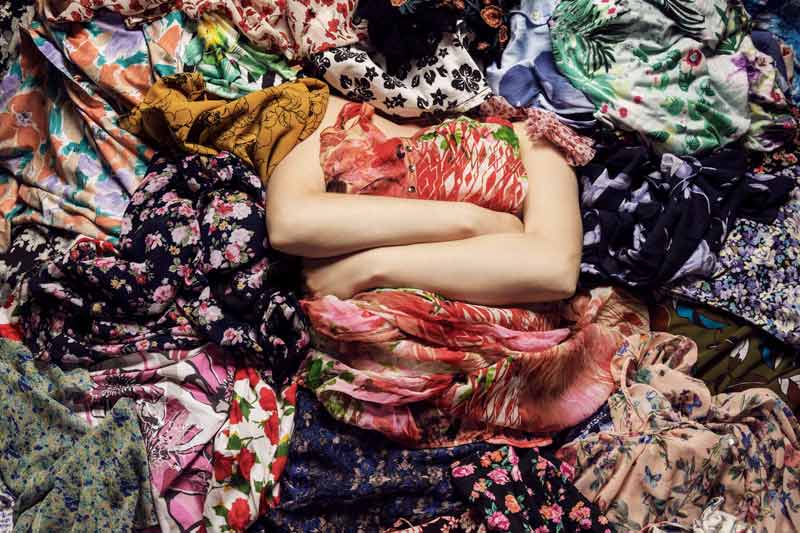
Every season, why deprive yourself? You can buy new T-shirts for €5, €10, €15, a pair of jeans with the latest fashion cut, a dress with the print that's all the rage. Just a few months later, they're forgotten, out of fashion, damaged. Direction: trash!
According to studies, the French buy between 9 and 30 kg of clothing per year, of which only 30% will be worn regularly, would give 3 kg, and less than a quarter will be recycled (source NOVETHIC ). Industry figures reveal that clothing now has a lifespan of two to ten years (one to two years for underwear and t-shirts, four to six for suits and coats).
A waste fought by the public authorities
600,000 tons of clothing are thrown away each year in France. However, the poor quality of the majority of them makes their reuse complicated and their resale unattractive. Their mixed composition makes it impossible to recycle. Not to mention certain practices of brands and distributors: in early 2018, photos posted on Facebook showing coats and jackets from the Célio brand, torn and thrown in the trash on a street in the center of Rouen, caused emotion and anger. This scandal came three weeks after the broadcast of a report in Denmark claiming that H&M had burned nearly 12 tons of clothing since 2013.
The result was the vote on the Anti-Waste Law adopted unanimously at the end of 2019 and the Circular Economy Law voted in January 2020. From 2022, brands will be prohibited from throwing away or burning their unsold non-food items.

Slow fashion, a clean and responsible fashion
Produce less, but better on the one hand. Buy less, and thoughtfully on the other. Slow fashion was born from this desire to get back to basics. It is recognized by consumers who are determined to pay more attention to their social and environmental impact and by brands that offer more timeless product ranges, designed to last through the seasons. This movement aims to put an end to waste, preserve our environment and take people into account: in short, ethical, sustainable and committed fashion. Quality, protection of the environment and workers, fairness, limited production, redesigned product life cycle are all values represented by slow fashion brands. Some, like the ForLife brand, have even chosen to indicate on their website the origin of raw materials, the location of production plants and the cost of manufacturing, in complete transparency. A label called Slow we are has even been created.
Slow fashion, a simple step backwards?

Slow fashion offers a viable and responsible alternative to fast fashion. But if you think about it, it really does seem like a step backwards. Before the advent of “Ready-to-wear”, we bought very few clothes and wore them for a very long time, even if it meant recycling the fabric in another form. And for a long time, some brands, such as Agnès b., APC or LDB design by, have been offering clothes made in France or Europe, with a timeless design, quality materials and made to last.
Slow fashion is all the rage and all the brands that have been created recently claim to be part of this movement. The downside of this success is that these brands are plentiful today!

What are the most polluting materials? How can we avoid them?
Whether natural, artificial or synthetic fibres, the raw materials used in the fashion industry take a heavy toll on the planet. Starting with the 4% of the world's drinking water used to produce clothing.
If we trace the transformation chain of a garment, almost every stage is a source of pollution: the production of natural fibers with breeding or cultivation, the production of synthetic fibers, the transformation of raw material into yarn (spinning), weaving, manufacturing, distribution with its transport, and maintenance. Thus, one of the phases contributing the most to global warming via CO² emissions is the production of raw materials which concentrates on average 35% of emissions (8% for wool and 72% for an anorak). Furthermore, the dyeing and treatment of textiles are the cause of 20% of water pollution in the world.
Cotton, a scourge for water

It represents a quarter of the raw materials used in the composition of textiles, or 17.7 million tonnes in 2015. However, the environmental impact of conventional cotton cultivation is alarming. It covers approximately 2.5% of the world's cultivated areas, and in 2016, 64% of the cotton grown in the world was genetically modified. But above all, cotton swallows up phenomenal quantities of water for its cultivation.
Cotton devours water
Cotton cultivation requires a lot of time, lots of sun, 120 days of water to ensure its growth, then dry weather at the end of the growing cycle. These climatic conditions are generally found in tropical and subtropical latitudes. To compensate for the differences in precipitation and its random distribution, farmers use irrigation. In fact, 50% of cultivated areas are irrigated. As a result, cotton is the third largest consumer of irrigation water on the planet after rice and wheat, and ahead of corn and fruits and vegetables. Depending on the techniques used, it takes between 5,000 and 17,000 liters of water to produce 1 kg of cotton.
To find this irrigation water, water was diverted from rivers, lakes and groundwater. In this way, intensive cotton cultivation led to one of the greatest environmental disasters of the 20th century. In the 1960s, the countries of Central Asia (now Kazakhstan and Uzbekistan) were transformed into cotton fields under the leadership of the Soviet Union. Because rainfall was insufficient, the waters of the main tributaries of the Aral Sea were diverted. The Aral Sea lost 75% of its surface area and 90% of its volume between 1960 and 2005, resulting in saltier water, wiping out almost all forms of life and causing an increase in infant mortality, cancer, anemia and respiratory diseases in the surrounding populations.
But water is also needed at all stages of manufacturing, particularly for applying dyes and chemicals. The World Wide Fund for Nature (WWF) has designed an indicator, the "water footprint", to indicate the volume of fresh water consumed by the manufacture of a product. This index, which takes into account each stage of the production process, has made it possible to estimate the manufacture of a 250 gram cotton t-shirt at 2,720 litres of fresh water - or more than 13 bathtubs - and at 7,500 litres for the manufacture of a pair of jeans.
Cotton pollutes water
Cotton cultivation requires a lot of water, but also pesticides: it represents 25% of insecticides, 10% of herbicides used and 4% of nitrogen and phosphorus fertilizers used in the world according to the World Health Organization. All these products end up in drinking water, running off cotton fields into rivers and/or groundwater. Cotton also pollutes during its spinning: the threads are coated with oil or wax to withstand the high demands of industrial weaving machines. And the fabrics must then be washed to remove these lubricants. This highly polluting stage releases a lot of nitrates and phosphates into the water and thus destroys ecosystems.
Organic cotton, better but not perfect
Organic cotton was launched in 2005 by the Max Havelaar association. It helps to better preserve the land, which is not exhausted by intensive cultivation. But for cotton to be much less polluting, it must be allowed to grow with as little irrigation as possible, and care must be taken to ensure that dyeing treatments do not use heavy metals or azo compounds. The white must be obtained using hydrogen peroxide and not chlorine, which is not always the case.
Wool, the most polluting

Who could imagine that their soft and warm sweater, made of a completely biodegradable natural material, is actually an environmental disaster? And yet! The Global Fashion Agenda report showed that sheep's wool is one of the 5 most polluting materials to manufacture in the world.
Sheep, a major producer of methane
Each sheep produces nearly 30 liters of methane every day, which is emitted into the atmosphere. That's much more than their much-maligned bovine friends. Especially when you consider that there are 1 billion of them producing 2 million tons of wool! However, methane has an impact 28 times greater than carbon dioxide on global warming. In New Zealand, the 3rd largest wool producer after China and Australia, 90% of greenhouse gas emissions are due to sheep farming. In addition, manure from livestock pollutes the air, but also the land and water. Not to mention that cattle farming is responsible for deforestation (especially in England and Wales, where land is cleared and trees cut down), and soil depletion (because the animals graze).
Wool processing, highly polluting
After shearing, the wool is cleaned. Because raw wool is heavily loaded with impurities (250 to 600 kg per tonne): organic salts, soil, grease. Washing the wool also results in the evacuation of organic matter and pollutants from pesticides spread on the sheep. This process causes such pollution that the largest wool producers prefer to send this raw material to Asia to be washed. Finally, bleaching, dyeing, printing, finishing also involve the use of chemicals released into wastewater. Fortunately, in Europe, unlike in Asian countries, producers are required to treat their wastewater before discharging it.
Synthetic materials, a major source of microplastics

In ready-to-wear clothing, since 2006, the use of synthetic fibres, mainly polyester (but also polyamide, nylon, lycra) has exceeded that of cotton, because they are inexpensive and more resistant. More than 40 million tonnes are produced per year.
Petroleum based
Polyester is the most widely produced synthetic material. However, 70% of its production comes from oil, a non-renewable fossil resource. This production represents approximately 40% of the textile industry's greenhouse gas emissions, particularly due to the gases emitted during the oil extraction and processing phases.
Washing, a source of microplastics
The biggest environmental impact of fashion is not due to raw materials, production or transport, but to the washing of clothes, especially those made of synthetic materials. In addition to the amount of water and energy used and the discharge of detergents, these fibers release microparticles of plastic, which are then released into the oceans where they take decades to degrade. More than a third (35%) of microplastics released into the oceans come from the washing of textiles, according to the International Union for Conservation of Nature (IUCN). This represents 500,000 tons, the equivalent of 50 billion plastic bottles.
Artificial materials, an alternative to be improved
Artificial materials are the different categories of viscose obtained from natural resources such as wood cellulose (bamboo, corn, soy, beech or eucalyptus). Presented as sustainable and biodegradable alternatives to cotton and polyester, viscose made from bamboo, eucalyptus or wood (marketed under the name Modal) are promising, but their production has negative effects on the environment.
They promote deforestation

To provide the wood needed to produce these artificial materials (5 million tons), 70 million trees are cut down each year – an average of 140,000 hectares – and only to meet the demand of the textile industry. In addition, farmers, who practice monoculture, destroy biodiversity. Indeed, these monocultures, which always draw the same nutrients from the soil and exhaust it, force farmers to use pesticides and fertilizers.
A polluting transformation
The viscose process is very water-intensive during its manufacture: 400 to 11,000 liters of water to produce 1 kg of viscose. The wood pulp, dissolved in caustic soda baths to obtain a flaky mass, is mixed with carbon disulfide to make the paste used throughout the process. Finally, the filaments obtained are cooled in a bath of sulfates and sulfuric acid. These aggressive chemicals, which remain partly in the fabrics made from viscose despite the treatments (dyeing, printing, finishing, washing, etc.), are toxic for both the workforce and the consumer.
Tencel, the ecological fiber
Lyocell, born in the United States in the 1970s, which became the registered trademark Tencel (by the German company Lenzing AG which exploits it), is an ecological fiber created from eucalyptus, bamboo or hardwood pulp. It is made from wood fibers from sustainably managed forests (PEFC-FSC certificate), whose trees consume little water. Eucalyptus only needs the amount of rainwater to grow, without pesticides or intensive irrigation systems unlike cotton. In addition, the yield of Tencel is ten times greater for the same cultivated area than that of cotton. Its patented manufacturing process is also cleaner than viscose. The cellulose, dissolved in a non-toxic solvent (Amine oxide), is recovered and recycled at 99.77%. Lyocell has a low environmental impact thanks to its production in a quasi-closed loop circuit.
3 eco-responsible solutions
How to opt for cleaner fashion?
1- Choose linen, hemp or Tencel

Flax , biodegradable, is a crop that requires very little water and is easily organic. In addition, everything in the plant is useful and used. Finally, it is a local crop, because France is one of the largest producers of flax in the world.
Hemp, still little used in textiles, is a super-resistant fiber that hardly pollutes. Its cultivation even has beneficial effects on the soil.
As for Tencel, it is a fairly virtuous alternative to cotton or viscose.
2- Prefer organic textiles
There is only one organic textile label : GOTS. This very demanding label ensures that cotton, linen or hemp are grown without insecticides or pesticides; 91% less water is used for organic cotton compared to conventional cotton throughout the production chain (artisanal and non-systematic irrigation, no pesticide spraying which reduces water consumption, etc.); decent working conditions and wages for farmers and employees (fair trade); ecological dyeing, no bleaching with heavy metals, but with hydrogen peroxide.
Beware of the Oeko-Tex label. Very often highlighted, it certifies that the finished product (clothing or fabric by the meter) has been tested in a laboratory to verify its non-toxicity. But it does not certify that a fabric is organic, and the ecological and ethical aspects are not controlled. Conventional cotton can be Oeko-Tex certified even though it was grown with pesticides, potentially manufactured in questionable conditions, etc.
3- Switch to recycled, upcycled and second-hand
The use of recycled cotton in fact makes it possible to reduce all these environmental impacts (compared to virgin cotton): global warming, water consumption and pollution, energy consumption, respiratory effects, etc.
The same goes for synthetic fibers recovered from used clothing.
But this industry is still in its infancy. For now, the emerging trend among young consumers is to consume second-hand clothes : thrift stores, purchases on platforms like Vinted, etc.
As we have seen, buying a garment made of natural and noble materials, such as cotton or wool, is not necessarily a more ethical and ecological purchase. One thing is certain: we must forget about synthetic materials which, in addition to often being of poor quality, are extremely polluting in both production and maintenance.
It is high time to read textile labels as we do for food products. While this approach requires time and education, it is the only way to raise awareness and build a more responsible textile industry.

Second-hand, the future of fashion?
Until recently, buying second-hand meant running around thrift stores, searching through bins of clothes by the kilo or buying a vintage item in a slightly chic consignment store. But the phenomenon has taken on another dimension in just a few years.
Buying second-hand is becoming the norm for more and more consumers disgusted by fast fashion and aware of the consequences of this clothing overproduction. This eco-responsible transition, which explains the rise of new sales platforms, is also encouraging more and more players - brands and distributors - to organize their own circuits, to get a piece of the pie.
Beyond a purely ecological motivation
One might think that the ecological damage (of fast fashion) is the only driving force behind this second-hand movement. Oddly enough, this is not the only explanation for the success of this new market.
Second hand is no longer negatively connoted
The sociology of consumption has changed profoundly. Buying second-hand clothes is no longer negatively connoted as a social or economic factor. Buying second-hand is no longer synonymous with poor quality or cheap items. It has not only become a common gesture, but a real militant act that we feel proud of and that we claim.
An eco-responsible awareness

Growing consumer concerns about eco-responsibility – heightened since the outbreak of the health crisis – are driving the growth of this market. According to a 2020 study conducted by the Boston Consulting Group for the Vestiaire Collective platform, 70% of the panel indicated that they were turning to second-hand clothing because of its sustainable nature, compared to 62% in 2018. And nine out of ten Generation Z consumers like the idea of buying second-hand clothing. These sustainability enthusiasts, aware of their role in changing the fashion industry on an environmental level, are turning away from fast fashion and its catastrophic consequences on the planet to turn to the second-hand fashion sector. It is an affordable and non-polluting alternative , since it is already produced. These enthusiasts are won over by the principle of circular fashion, which limits waste and extends the lifespan of a garment. Not very active in resale, they do not seek low prices, but are engaged on numerous platforms.
From economic consideration to snobbery
But other criteria also explain second-hand purchases: the economic aspect is obviously a determining factor. Clothes - often from fast fashion - offered for a few euros allow you to dress at a lower cost. For the youngest, this type of purchase allows them to continue to overconsume without breaking the bank or feeling guilty. These impulsive and trendy consumers, both sellers and buyers, give away their clothes to be able to buy new second-hand ones.
Conversely, older consumers, looking for items with high added value, are also won over by second-hand goods which provide access to unique and exclusive products.
A desire for singularity
Fashionistas are attracted by the uniqueness of pieces. Second-hand gives them access to past collections, other eras (such as the revival of disco or 70s pieces), or to unique designer pieces. Some even see it as a way to find clothes that they can "upcycle" as they wish, creating their own personal look.
Second-hand, a booming market
The community of second-hand customers is only growing .
More and more followers
In 2019, 25% of international shoppers purchased a second-hand fashion item, compared to 24% in 2018, which represents around 10 million new customers in one year for second-hand.
According to FashionNetwork, 29% of French people are buying clothes that have had a first life in 2021, compared to 16% in 2018.
And the study conducted by the Boston Consulting Group among 7,000 consumers in six countries (United States, France, Spain, Italy, Germany and the United Kingdom) reveals that 69% of respondents say they are ready to consume more second-hand items in the future. Thus, by 2023, 27% of the wardrobe of consumers who practice second-hand will be composed of items that have already had a first life, compared to 21% today.
BCG estimates that by 2028, the second-hand market will surpass that of fast fashion in volume. Currently estimated at between 30 and 40 billion dollars (25 to 34 billion euros) worldwide, or 2% of the total weight of the fashion and luxury sector, the global second-hand market is expected to grow by 15 to 20% per year over the next five years. In France, it is worth 1.16 billion euros (Kantar figures).
A phenomenon that the health crisis has doubly amplified: the fashion sector of the research company Kantar revealed that in 2020, during lockdowns, 40% of French people sorted out their closets... Thank you Marie Kondo!
The Instagram effect

@zoelegervintage

@imperfectparis

@petitechineuse

@lapin.vintage
On Instagram, fashionistas specializing in second-hand goods display their latest thrift store finds. Behind accounts like Zoé Léger Vintage , Imparfaite , Petite Chineuse or Lapin Vintage , there are tempting digital showcases filled with vintage or second-hand pieces. And given the growing number of followers, it's understandable that they are managing to attract more and more holdouts who would otherwise have had trouble taking the plunge.
The beautiful story of second hand
From clothes found in garage sales to specialist sites, including consignment stores and platforms.
From second-hand to high-end digital platforms
The elders knew Guerrisold , the Ressourcerie , the Sunday garage sales and the neighborhood consignment shops. Part of the pleasure of rummaging was searching, imagining, cleaning, ironing before obtaining a decent garment.
Then the first digital Marketplaces appeared at the end of the 2000s: eBay internationally then Le Bon Coin in France, then in 2009 resale sites specialized in fashion which established themselves as the leaders in the sector: Vestiaire Collective (initially Vestiaire de Copines), Vide Dressing . But Vestiaire Collective like Vide Dressing remain the digital counterpart of high-end consignment stores. Only luxury brands are accepted and the site takes a substantial commission linked to its authentication service, a guarantee of security for the buyer and the key to its success. From 1.5 million registered users in 2013, Vestiaire Collective has grown to 11 million in Europe in 2021. As for eBay and Le Bon Coin, they remain very generalist sites.
The Vinted phenomenon

This application has been shaking up the French clothing market for two years. In fact, it is the first Marketplace with Peer to Peer file sharing that allows the quick and secure purchase of second-hand, low to mid-range items.
Created in Ukraine in 2008 and arriving in France in 2013, this community site owes its take-off to a stroke of genius. In 2016, the current CEO Thomas Plantenga took a gamble on eliminating commission fees to facilitate transactions between sellers and buyers, replacing it with a 5% "buyer protection". Its quick and easy-to-use application explains its success with millennials and their younger siblings. Vinted has 30 million users in Europe, including 12.5 million in France in 2020. It was the 6th most visited e-commerce site in France in the 2nd quarter of 2020 (Fevad/Mediamétrie), a country that currently represents nearly a third of its turnover. This impressive phenomenon worries all players in the sector.
Everyone is getting involved
While platforms have become the main channels for the resale of second-hand clothing in France, we are seeing a "boomerang effect". Aware that this flourishing market could escape them, fashion distributors and brands have been trying for two years to integrate second-hand into their offer. The year 2020 marked a real acceleration in experiments around second-hand, from hypermarkets to high-end.
Initiatives of physical and digital distributors
Last year, many distributors created a second-hand tab or section.
In December 2020, La Redoute launched its own space for exchanging second-hand products between individuals, called “ La Reboucle ” and accessible on its portal or app. The Spartoo fashion platform referenced on the Marketplace of its French site offers several thousand second-hand clothes with the help of a specialized service provider ( Patatam ). Cdiscount had already launched this service, as had Zalando internationally.
And Auchan, Kiabi, Promod are among the many players to have installed second-hand clothing sections in their stores over the past year. Here again, the clothes do not necessarily come from their own sections originally. They are supplied by two service providers specializing in second-hand collection. To arrive at a paradox: a Zara dress sold at Auchan for 8 euros!
Brands want to take back control
Brands are now aware of the "dilution" of their image and the risk of seeing their products on sites that do not suit them. The resale of their items is not the only problem. Some high-end French brands have therefore launched initiatives to promote second-hand goods. Cyrillus has created its own resale platform, called Seconde histoire . Petit Bateau was one of the pioneers in this area with an app that went online in 2017.
Since 2012, APC has been collecting its used jeans in stores (for a 50% reduction on the price of new jeans), resold after careful washing and ironing.
If second-hand sales are always seen as a service, behind this desire for circularity often lies the - antagonistic - ambition to generate new sales, by capturing the sums virtually exchanged between consumers. As we have seen, the fruits of sales can be recovered in cash or in vouchers, topped up by 20% at Kiabi, 25% at La Redoute, 30% for Promod or Maison 123. But 60% of customers opt for the voucher.
Ba&sh has come up with a super smart system to build loyalty, authenticate and recruit, while keeping control of its brand image. This system encourages the resale of Ba&sh clothing on second-hand platforms, via the brand's website. Customers can put an item up for sale via a button in their order history that generates a digital identity certificate for the item of clothing in question. Once purchased by another person, they can find the history of the item of clothing using this unique certificate. The goal is both to keep customers in its universe, and to recruit other customers who would not have bought these new items.
Luxury enters the dance
In the luxury niche, Gucci and Stella McCartney have joined forces with the American site The RealReal to sell their second-hand products, while the LVMH group declared in December 2020 during its "Climate Week" that it was thinking about the subject.
As for luxury shoemaker JMWeston, it has been selling its own vintage models since October 2019. Customers can return their worn-out shoes for a voucher, which will be restored to their former glory in the Limoges workshops. Since January 2020, the Parisian stores on the Champs-Elysées and rue Saint-Honoré, as well as the one in Tokyo, have been displaying them in their windows at half price.
It is also a way of combating counterfeiting, a major problem linked to this market.
Rent, another circular model


The other economic model that is gaining ground among the younger generation is sharing and renting clothes from other individuals' wardrobes. RenttheRunway led the way in 2009, with a monthly subscription system. The first services were offers with a central wardrobe. But since then, several ready-to-wear rental applications between individuals have offered this new way of consuming by increasing the lifespan of clothes and making luxury items more accessible: By Rotation , Les Cachotières , mabonneamieparis , lafashionlib … Instead of selling and buying, renting allows you to monetize your wardrobe or try something new for a given time.
While we only wear about 40% of our wardrobe, there are several ways to add value to it while avoiding the waste of overconsumption. The downside: this circular fashion has already become a real business that brands and distributors are trying to regain control of.

Ethical and trendy brands to follow
Organic, recycled, responsible, vegan or Made in France, ethical fashion is not austere. It is fun, sexy, chic, impertinent and militant. Demonstration with 10 eco-responsible and irresistible brands. Which one will make you fall in love?
As we know, fashion is the second most polluting industry on the planet. While traditional fashion manufacturers are striving to meet the requirements of Clean Fashion , young ethical fashion companies are focusing on transparency from the outset. They use eco-responsible materials, i.e. with a low impact on the environment, and follow virtuous manufacturing processes with respectful working conditions. To be adopted as soon as possible.
“Parisian and so what”, the responsible style

We love the brand of Laury Thilleman, ex-Miss France, which only uses natural materials or recycled polyester. The Made in France clothes are made in Parisian workshops in collaboration with OEKO-TEX certified factories (fabric checked at each stage of processing and absence of chemicals harmful to health). To avoid waste, the collections renewed every 2 months offer a maximum of 25 models and are produced as they are sold. The brand donates part of its profits to Reforest'action , a tree replanting program.
“We are jolies”, pretty organic lingerie

Initially nicknamed "Jolies Culottes", the brand became "We are jolies" by expanding its lingerie offering. We love it because it is organic, accessible, sincere in its sizes, zero complexes and inclusive.
The products, made of organic cotton labeled OEKO-TEX and Gots (Global Organic Textile Standard) are made in Portugal. This ultra-transparent brand goes so far as to disclose its profit margin and give all the details of its sales prices. In addition, you can send back your old lingerie which will be recycled into eco-responsible bricks to build houses. Very committed to women, it also cultivates sisterhood!
© Photo We are pretty
“Les Récupérables”, upcycling fashion

This brand pushes the clean model to the limit by adopting the principles of textile revaluation, upcycling. It offers 4 collections per year, 100% Made in France, based on fabrics recovered from French manufacturers and assembled in integration workshops. The limited series creations therefore respect the environment. This young company also organizes fashion shows in secret addresses.
© Photo The Recoverables
“People Tree”, both fair trade and vegan

This pioneering Anaise brand of fair trade fashion (Fair Trade certified) has given itself the mission of offering economic independence to players in the textile world, while protecting the environment, with a large majority of organic cotton or wool certified "Animal Welfare Act". We love its commitment and its timeless style.
© Photo People Tree
“Thinking Mu”, fun recycling
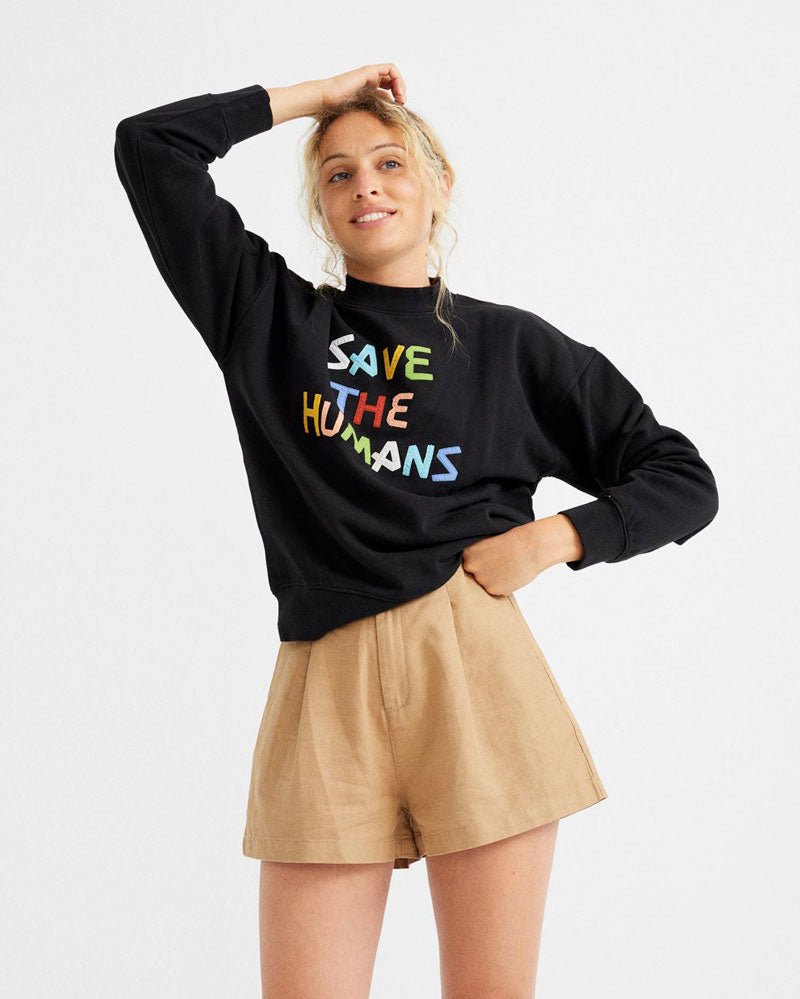

This eco-responsible and fair trade Spanish brand works with recycled materials, cotton and GOTS certified organic fibers. It has been manufactured in India in the same workshops since its creation. We remember its young, offbeat and vitamin-packed spirit.
“Dedicated”, eco-friendly streetwear

We remember this Swedish brand born in 2006 which wants to be close to nature, fair and responsible. It works with GOTS and Fair Trade certified cotton, GRS recycled polyester and recycled fibers such as Tencel Lyocell. Some clothes are made from fibers derived from plastic. Dedicated works with artists from all over the world to display a resolutely graphic, unique and diverse style.
“Rezine”, a slow fashion

Created in 2019 by a young couple, the Rezine brand offers 4 ephemeral and responsible collections per year, made in Paris, with natural fibers. Limited editions are available for pre-order to adopt a reasonable manufacturing pace at the fairest price. We love its strong pieces, and its commitment to lasting quality with great finishes.
© Photo Rezine
“Patine”, the feel-good essentials

This brand promises comfortable, easy-to-wear and anti-disposable clothing. Made from natural materials (GOTS organic cotton, linen, hemp) with a low ecological footprint or artificial materials made from natural materials, all the clothes are available only on the site, to avoid intermediaries and ensure an affordable price. In addition, Patine supports Cravate Solidaire, an association that fights against discrimination in hiring by collecting clothes for people looking for a job and who will have to go through an interview.
© Photo Patina
“Nénés Paris”, 100% recycled lingerie


Congratulations to this brand that uses the ends of rolls and fabric scraps produced by the textile industry and used plastic bottles to make panties and other lingerie. Crushed, cleaned, then melted, these materials are then used to remake fiber that is used to create new pieces. We remember the figures announced by this 100% recycled lingerie: 80% less CO2 and the equivalent of 7 bathtubs of water saved per bra! In addition, the models are nice and sexy... What more could you ask for?
“Reformation”, sustainable and accessible

Already, we love the slogan of this Californian brand born in 2009: "Being naked is the #1 most sustainable option. We're # 2", translate "Being naked is the first most sustainable option. We are the second". Its ambition is to design its own products to bring sustainable fashion to everyone, with its clothes made in limited edition from recycled products. Its success has been dazzling from the beginning.
© Photo Thereformation
“Veja”, the eco-friendly and fair trade sneaker

It's hard to ignore eco-friendly and fair trade sneakers in this selection of ethical brands. Veja is a French brand created in 2004. The sneakers with a very trendy design are made with raw materials from organic and agro-ecological farming, without chemicals or polluting processes. This Brazilian manufacturing combines fair trade organic cotton and natural rubber soles. The brand, created by two French people, supports several associations in Brazil and France. We can only agree!
© Photo VEJA

Cleaner jeans, is it possible?
We all have a pair of jeans – or even several – in our closet. But behind this distinctive and desirable garment, lies an object with a strong environmental and human impact. Decryption.
Every year, 5 billion pairs of jeans are produced and 2.3 billion sold, including 63 million in France! This shows how universal these sturdy blue pants have become, worn by everyone, from 3 to 90 years old, from workers to senior executives, from the United States to Cambodia.
Where exactly does it come from? How and by whom is it produced?
From the Wild West to punks, from cotton fields to Chinese factories, from specialist brands to fast fashion chains, a short saga of jeans and analysis of the ways to offer them a future more in line with Clean Fashion , better for men and the planet.
The history of jeans shapes the 20th century
Originally, jeans or denim?
Fashion historians have been unable to pinpoint the exact origins of jeans, which are now commonly confused with denim. It is known that in the Middle Ages, cotton was mixed with linen or wool in fabrics called fustian. Northern Italy produced large quantities of this fabric, which was exported throughout Europe, particularly to France, where it was used in sailors' trousers and also in ships' sails.
In Nîmes, weavers tried to reproduce this fabric, without success. In the 17th century, they developed another fabric, a wool and silk twill known as denim (from Nîmes). This beige canvas, renowned for its resistance, used as work clothing by shepherds and Cévennes farmers, was subsequently exported to Genoa and dyed indigo blue (Genoa blue) to make it a cheap, resistant garment, less dirty than light beige. These fabrics exported to England are found under the name jean or jeane in the registers of the Port of London. In short, from the Nîmes canvas dyed with Genoa blue, denim and blue jeans were born.
As for clothing, it appeared with the rise of cotton cultivation in the southern United States in the 19th century and the Gold Rush. A Jewish tailor from Bavaria, a certain Levi Strauss, created in the 1850s for gold prospectors and lumberjacks, work trousers cut from his cotton tent canvas and reinforced with copper rivets at sensitive points (pockets, flies). The patent was filed in 1873.
From the Wild West to Hollywood
The preserve of cowboys in Lévi-Strauss advertising, these cheap and durable trousers became the basic clothing of farmers and workers during the Great Depression of the 1930s. After the Second World War, the United States flooded the European market with war surpluses, including jeans. And when Hollywood got hold of them, and Gary Cooper, Marlon Brando and James Dean made them their emblem, the phenomenon took on a whole new dimension. Younger generations seized on them and made them a sign of protest and protest.
From counterculture to mass manufacturing

In the 50s and 60s, it was the attribute of bikers and the provocative hip movements of Elvis Presley and the emerging rock'n'roll. When Marilyn Monroe wore it in "The Devil Wakes in the Night", she made it a symbol of the fight for female emancipation. In the 60s and 70s, it was adorned with embroidery and bell-bottoms to participate in the hippie movement. And in the 80s, it adopted a punk look.
But with the arrival in the 90s of Lycra®, tight jeans, "stone-washed", "ripped", colored, jeans are victims of their success. Fast fashion chains seize them. They become a real product of fashion and consumption, and even of overconsumption. They are then the symbol of the excess of the fashion industry.
The life cycle of jeans, an environmental and human catastrophe
A great traveler
The production cycle of a pair of jeans involves many steps: growing cotton fibers, processing and spinning, dyeing, weaving, cutting and making, washing and finishing. Then it is packaged, shipped, stored and finally put on sale. However, each of these steps corresponds to a different know-how and geographical area.
Cotton is grown in India, Australia or Africa, spinning is done in Pakistan, dyeing in China, manufacturing and washing take place mainly in Turkey, while threads and finishing are done in the West or in Japan.
This ultra-globalized production and the journeys from one continent to another are responsible for an enormous carbon footprint : it is estimated that a denim garment can travel up to 65,000 km – or 1.5 times the circumference of the Earth – before landing in our wardrobes. Its CO2 emissions are estimated at 20 kg on average and up to 40 kg. This heavy toll also includes the CO2 emissions required for growing cotton, the use of agricultural machinery, spinning, weaving and factory assembly work.
A big polluter
All these steps are also energy-intensive and/or polluting.
- Water glutton
The production of a pair of jeans consumes between 7,000 and 10,000 liters of water according to ADEME, 3,781 liters according to the United Nations Environment Program (UNEP). The first step, and not the least, is the production of the raw material, cotton. Cotton fields only cover 3% of cultivated land, but it is the third most irrigated agricultural activity after rice and soybeans. Dyeing jeans and washing them are also big consumers of water.
- Full of toxic products
To ensure a high yield, its cultivation requires intensive use of fertilizers and pesticides . Cotton is mainly planted in regions where pesticide regulations are particularly flexible. India, in particular, allows the use of diethion, a highly toxic insecticide that is dangerous for the brain, heart and lungs and suspected of being carcinogenic. In order to limit its use, 82% of cotton grown today is genetically modified. However, demand is such that even GM cotton cannot do without these products entirely.
The blue dyeing of denim, when it is still obtained using indigo, requires huge quantities of water and pollutes wastewater. But it is often produced using synthetic products containing, in particular, chlorine and heavy metals. In Southeast Asia, these products are released into nature without prior treatment, where they infiltrate the soil and water tables.
- An equally polluting use
A study conducted by Levis on the life cycle of a 501 showed a surprising fact: the environmental impact of using a pair of jeans is almost as important as its production. In fact, according to this study, its impact is broken down as follows:
- Fiber culture: 9%
- Fabric production: 27%
- Cutting and making: 8%
- Washout: 5%
- Transport and resale: 11%
- Consumer maintenance: 37%
- End of life: 3%
The astonishing figure of 37% that assesses consumer maintenance – which would reach 48% according to ADEME – varies according to the frequency of washing and the type of detergent used (the French and Americans wash their jeans after wearing them 2.5 times while the Chinese wear them 4 times), but also whether they are machine dried and ironed. In the United States and Japan, many consumers even take their jeans to the dry cleaners!
What this study does not say, but what the experts reveal: if jeans pollute during their use, it is because of the many chemicals used during their production – often not authorized in Europe – and which are released when they are washed! Their end of life is also problematic, because the composite finished products (presence of Lycra® or elastane, rivets, etc.) complicate their decomposition, and therefore their reassembly.
A human cost
All employees working with jeans are affected.
In cotton fields, farmers breathe toxic chemicals with high rates of respiratory illness and cancer, as do workers in China's dye factories.
But another process is just as devastating. Sandblasting, an industrial method used to age jeans (make them less rigid) and fade them, propels sand or silica powder at very high speeds onto the denim fabric. This technique exposes workers to very volatile fine particles that lodge in the lungs and cause respiratory irritation, silicosis and cancer. Fortunately, it is now banned in most Western countries. Turkey, once a major bastion of sandblasting, put an end to it in 2009. The following year, under pressure from the “This Jeans is Deadly” campaign, more than 40 major denim brands followed suit and banned sandblasting. However, this method is still in use today – particularly in China – along with other equally harmful techniques such as manual sanding or chemical treatments with potassium permanganate.
Furthermore, as with other clothing, denim is mainly produced in countries where workers' rights are not as controlled and protected as in Europe. Poor hygiene and safety conditions, piecework wages, no social or health protection, and sometimes forced or child labor...
Towards cleaner jeans
The denim industry was one of the first to be singled out, so it was one of the first to initiate its socio-environmental transition. Initiatives have been taken at all stages. And if in 2020, less than 5% of jeans were eco-designed, avenues are beginning to emerge.
More sustainable raw materials


The use of organic cotton reduces soil acidification and marine eutrophication by 25%, and the occupation of agricultural land and water consumption by 60%. But today it only represents 1% of the cotton produced.
Major jean makers, such as Levis or Lee, are working on alternatives to cotton, such as linen, cottonized hemp or Tencel™, rustic and sustainable materials, less water-consuming, less chemical-producing and more environmentally friendly. A young French brand (1083 is the distance between the two furthest points in France.), which produces jeans that are almost 100% Made in France, has even created the Infini, made from recycled polyester (from plastic bottles and marine waste), returnable and infinitely recyclable.
On the labels, the consumer can look for GOTS (Global Organic Textile Standards) labels ensuring traceable organic cotton that meets social and environmental criteria, or BlueSign, C2C Certified™ ensuring that the finished textile or garment is free of ZDHC (Zero Discharge Hazardous Chemicals) and can therefore be integrated into a circular chain.
Less polluting dyes
Traditional indigo is the least polluting way to dye jeans. Using recycled fibres sorted by colour also helps to limit the impact of this step, although they are systematically re-coloured. Lee tackled the dyeing problem with Indigood, a foam dye that reduces chemical use by 89% and energy consumption by 65%, and uses no water at all.
Laser and ozone treatments
There are “clean” alternatives to sanding and grinding. To make jeans look worn, lasers are used to create faded stripes and ozone – instead of water – is used to fade the denim. The laser alters the surface of the thread by burning. Bleach washing is replaced by ozone applied to damp jeans that are then rinsed. The ozone, which is then converted into oxygen, reduces energy consumption and water consumption.
More and more brands are launching more responsible denim collections or capsules. Levis has developed around twenty non-patented techniques, and therefore open to all, to save water in manufacturing. At Lee, the "Back To Nature" line offers totally biodegradable pieces made from cotton and linen threads without rivets.
There remains a major problem: the recyclability of jeans. On this point, the Ellen MacArthur Foundation has established specifications for producing jeans in a circular economy: The Jeans Redesign. And leasing, rental, upcycling* and repair initiatives are emerging.
It's true, the perfect pair of jeans doesn't exist yet, but would you be ready to give up this legendary and essential piece of clothing?


*UPCYCLING: why not treat yourself to a piece of recycled denim on the Bagarreuse website?
@bagarreuseparis is a young Parisian ready-to-wear brand, created by Simon and Julia in November 2020. An eco-responsible brand that makes its collections exclusively from fabric scraps; upcycling is therefore at the heart of their concept… and their brand name. In the last 5 letters of Bagarreuse, you can read RE-USE!